
If you have spent any time in or around modern Christianity, especially in the United States, you have probably heard of the Rapture. According to this belief, Christians will suddenly be taken by Jesus from the Earth and carried up to Heaven. For most people who hold to Rapture theology, this event will occur before a period of tribulation and, ultimately, the end of the world. While this idea is extremely popular among many evangelical Christians today, it is a relatively modern doctrine. And as we will see in this essay, the Rapture, as it is commonly understood, is not actually taught in the Bible.
To explore this claim, we need to go back to the world in which Jesus lived and taught. We discussed the apocalyptic worldview of Second Temple Judaism in the first essay in this series and the historical Jesus in the second. As a quick refresher, apocalypticism was centered on a genre of literature and storytelling in which a human narrator is taken up to heaven or receives a vision. Then usually an angelic being reveals the secrets of heaven and God’s plan for humanity to the narrator. These revelations often included a cosmic struggle between good and evil, the destruction of the current corrupt world order, and the establishment of God’s Kingdom on Earth.
While there were many variations within this worldview, one of the most popular themes was the restoration of the Davidic kingdom through a messiah from the line of David who would rule Judea as God’s representative on a renewed Earth. Another important feature was the expectation of a general resurrection of the dead. In this vision of the future, the righteous would remain and inherit God’s Kingdom, while the unrighteous would be destroyed. This did not involve eternal torture. Rather, many Jews of this period appear to have held what we would today call an annihilationist view, in which the unrighteous are consumed by fire and cease to exist.
When we look at Jesus, we see him speaking directly within this framework, in a way that was very much in line with Jewish apocalyptic expectations of the day. For him the Kingdom of God was imminent, and he and his disciples had a definite role in it. This would take place on Earth, rather than Heaven.
But once Jesus was executed, this changed everything. With his death and ascension, Jesus is not on Earth to fulfill the role of the Messiah, he is in Heaven. So he has to come back. This is where the idea for the Second Coming originates, and it is from this impending event that Rapture theology is based.
With this background, we can evaluate whether the modern doctrine of the Rapture is actually found in the New Testament.
1 Thessalonians 4 and the Meaning of Apantēsis
One of the key passages used to support the doctrine of the Rapture is 1 Thessalonians 4:13-18. In this passage, Paul describes what he believes will happen when Jesus returns. He writes that believers will be “caught up” to meet the Lord in the air. The Greek word translated as “caught up” is harpazō. When the New Testament was later translated into Latin, harpazō was rendered as rapiemur, from which the English word “rapture” ultimately derives.
Yet the most important phrase in the passage may not be “caught up” at all, but rather the verb “to meet.” The Greek word used here is apantēsis. Many scholars note that this was often used as a technical term to describe the custom of a city’s inhabitants going out to greet an arriving king, dignitary, or honored guest and then escorting that person back into the city.
We see this word elsewhere in the New Testament. In the parable of the ten virgins, people go out to meet the bridegroom. In Acts, believers travel out to meet Paul and accompany him on his journey. The image is not one of people leaving permanently for another destination. Instead, it is a picture of people going out to welcome a returning figure and then accompanying him as he arrives.
The same observation applies to the word “air.” The Greek word used is aēr, which refers to the lower atmosphere. Paul does not use the more common Greek word ouranos (”heaven”) in this passage. Likewise, the reference to “the clouds” (nephelais) is consistent with this event happening in the Earth’s atmosphere. In fact, there is no point in this passage where believers are taken away to heaven permanently.
The Days of Noah
Another passage often cited in support of the Rapture is Matthew 24:40-41, where Jesus says:
“Then shall two be in the field; the one shall be taken, and the other left. Two women shall be grinding at the mill; the one shall be taken, and the other left.”
At first glance, many readers assume that the person who is “taken” is one of those being taken up to Heaven. However, it is important to look at the verses immediately preceding this passage, because they provide the context for what Jesus is describing:
“But as the days of Noah were, so shall also the coming of the Son of man be. For as in the days that were before the flood they were eating and drinking, marrying and giving in marriage, until the day that Noah entered into the ark, And knew not until the flood came, and took them all away; so shall also the coming of the Son of man be.” (Matthew 24:37-39)
The crucial question is: Who was taken away in the story of Noah? It was not Noah and his family. They were the ones who remained. The people who were “taken away” were the unrighteous who perished in the flood. If Jesus is using the days of Noah as the model for understanding his return, then the passage points in the opposite direction from modern Rapture theology. The righteous remain, while the unrighteous are removed in judgment.
This interpretation becomes even stronger when we examine other parables Jesus uses to describe the coming Kingdom of God.
The Wheat and the Tares
We can see this same pattern in the Parable of the Wheat and the Weeds (or Tares), found in Matthew 13. In the parable, a farmer sows good seed in his field, but an enemy secretly plants weeds among the wheat. When the servants ask whether they should remove the weeds immediately, the farmer tells them to wait until the harvest. At that point, he says:
“Gather ye together first the tares, and bind them in bundles to burn them: but gather the wheat into my barn.”
This order is important. The weeds are removed first, while the wheat remains. If there were any doubt about the meaning of the parable, Jesus later explains it directly to his disciples. The field represents the world, the wheat represents the righteous, and the weeds represent the wicked. At the end of the age, Jesus says that the angels will first gather out of the Kingdom “all things that offend, and them which do iniquity.” Only after the wicked have been removed does “the righteous shine forth as the sun in the kingdom of their Father.”
Once again, the pattern is the same as in the story of Noah. The unrighteous are removed in judgment, while the righteous remain to inherit the Kingdom. This is the opposite of what we would expect if Jesus were teaching the idea of a Rapture in which believers are taken away from the Earth before judgment occurs.
Where Did the Rapture Concept Originate?
So where does the rapture idea come from? Surprisingly, it’s not ancient at all. It doesn’t appear in early Christianity. It doesn’t appear in medieval theology. Church fathers like Irenaeus and Augustine never describe anything like it.
Instead, the idea emerged in the early 1800s. It is most closely associated with John Nelson Darby, an Irish clergyman. In the 1830s, Darby began developing a new system of interpreting biblical prophecy, including the idea of a pre-tribulation rapture. These ideas are what came to be known as dispensationalism.
During Darby’s life, this particular theological framework was not very widespread. But that changed in 1909 with the publication of the Scofield Reference Bible, which popularized Darby’s ideas. They gained a wide audience through the 1910s and 1920s, especially in the United States.
From there, the idea spread further through books, preaching, and eventually popular culture. In the late 20th century, works like Hal Lindsey’s The Late Great Planet Earth (1970) and the Left Behind series (1995-2004) brought the Rapture into mainstream awareness. So, what many people today assume is a core Christian belief is, historically speaking, a relatively recent development. But it is a very popular concept in the US, especially among fundamentalist Christians across many Protestant denominations
Why This Matters
The reason the modern doctrine of the Rapture deserves careful critique is that it can shift attention away from the responsibilities we have in this world. It can diminish the urgency of Jesus’ message to begin living as if the Kingdom of God were already breaking into the world. At its heart, this is a choice between participating in the work of renewal here and now or expecting to be rescued from the world.
It is in what I believe to be Jesus’ authentic message that I find hope for our own age. Act now to help create the future we want. Take care of disadvantaged children now. Care for the elderly now. Stand beside those who have been harmed by unjust systems now. Lift up the people around you now. The Kingdom is not built through passive expectation but through the countless everyday choices that shape our communities.
Many scholars argue that Jesus, as an apocalyptic prophet, was a failed one. The end of the age he expected did not unfold in the way he anticipated. But perhaps the more important question is not whether Jesus failed but whether we did. He gave us a blueprint for a different kind of world with communities grounded in compassion, justice, forgiveness, and care for the vulnerable. Yet for much of the last two thousand years, many Christians have placed greater emphasis on waiting for Christ’s return than on embodying the Kingdom he proclaimed.
I consider myself a follower of Jesus rather than a Christian in the modern denominational sense. I see Jesus as someone uniquely attuned to what I call the universal consciousness, or the Elohim (see my book for an explanation). He looked at a world marked by injustice, corrupt power, and impending catastrophe. He interpreted those realities through the language of Second Temple Jewish apocalypticism.
But the lasting significance of his message is not found in the timetable of the end. It is found in his response which was to begin building the Kingdom now. It is within us, it is among us, and it is a task that belongs to every generation. If there is one lesson we should carry forward from Jesus’ apocalyptic message, it is this: don’t wait for a better world or to be rescued from this one. Start building the future you want now.
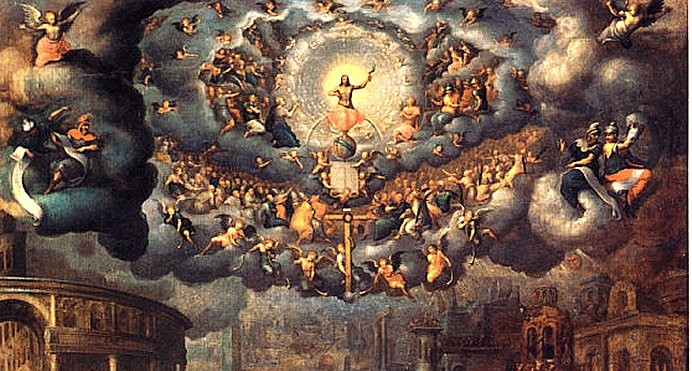
Cover image is The Last Judgement by Jean Cousin. Source image found here.
This essay is part 3 of a three-part series that deals with apocalyptic thought and its influence on modern society. You can read the other essays from the links below:
Part 1: The Origins of Apocalyptic Thinking
Part 2: Who Was the Historical Jesus
This essay develops themes explored more fully in my recently published book, The Last Apocalypse: Consciousness, Revelation, and the Future of Humanity.
 Building the Future Now

Leave a comment