
Category: Apocalyptic Thought

  • What is the Kingdom of God?

    The Kingdom of God is one of the central ideas in the teachings of Jesus, yet it is also one of the most misunderstood. Today, many people equate it with heaven or the afterlife. But that is not what ancient Jews generally had in mind, nor is it exactly what Jesus was talking about. To understand how he conceived of the Kingdom of God, we first have to understand the world in which he lived. In this essay, we’ll explore what the Kingdom of God meant in Second Temple Judaism, how Jesus built upon and reinterpreted that tradition, and why I believe his vision still has profound relevance for the challenges facing our society today.

    What Ancient Jews Meant by the Kingdom of God

    When ancient Jews spoke about the Kingdom of God, they were generally not referring to Heaven. They envisioned God intervening in human history to establish his rule on Earth. This kingdom would center on the restoration of Israel, the defeat of evil, and the renewal of creation.

    Much of this expectation was rooted in God’s covenant with David as described in 2 Samuel 7. According to the biblical account, David united the kingdoms of Israel and Judah into a single monarchy. God then promises that a descendant from David’s line will forever rule over his people.

    Most archaeologists today believe that there really was a historical David who lived around the tenth century BCE. This is supported in part by the Tel Dan Stele’s reference to the “House of David.” However, many scholars doubt that his kingdom resembled the vast united monarchy described in the Bible. Instead, it was likely a much smaller highland kingdom whose size and influence were expanded by later biblical traditions.

    Over time, the Davidic covenant took on increasing importance. By the Second Temple period, hopes for a future heir from David’s line had become widespread. Judea had spent centuries under foreign domination by first Babylon, then Persia, followed by Greece, and finally Rome. Many Jews believed that God would soon intervene in history, overthrow these foreign powers, restore the line of David, and reunite Israel under a righteous king.

    For many Jews of this period, this restoration of the Davidic kingdom was one of the primary ways they envisioned the coming Kingdom of God. The expected Messiah would rule as God’s anointed representative. The word Messiah simply means “anointed one,” referring to the ancient practice of anointing Israelite kings with oil as a sign that they had been chosen by God. Jerusalem would once again become God’s holy city, Israel would be restored, and the nations would recognize God’s rule.

    This kingdom would be a true theocracy, with God as the ultimate king and the Messiah governing as God’s representative. Justice would replace corruption and oppression. The wicked would be judged, God’s law would be faithfully observed, and peace would replace violence.

    The coming of God’s kingdom also involved a cosmic renewal. The dead would be raised, the righteous vindicated, and a final judgment would take place. Evil and those forces opposed to God would be defeated, then Creation itself would be renewed. Images such as the Tree of Life, abundant fertility, and harmony within nature recalled the Garden of Eden and pointed toward the restoration of God’s original intention for creation. The prophet Isaiah envisioned a world where nations “shall beat their swords into plowshares,” symbolizing an age of lasting peace.

    Although centered in Israel, this kingdom ultimately had universal significance. God’s reign would extend beyond Israel to all nations, and all creation would acknowledge his sovereignty. For many Jews, this was not simply another era of history but the beginning of God’s final and enduring reign over a restored world.

    Jesus and the Kingdom

    Jesus’ message was deeply rooted in these Jewish expectations of the Kingdom. He did not invent an entirely new concept. Rather, he inherited the hopes of Second Temple Judaism: a Davidic Messiah, the resurrection of the dead, a final judgment, the restoration of Israel and the Twelve Tribes, and God’s reign over the Earth. Matthew 19:28 illustrates this continuity well. Speaking to his disciples, Jesus says:

    “You who have followed me will also sit on twelve thrones, judging the twelve tribes of Israel.”

    This saying makes little sense outside the framework of Jewish restoration theology. Jesus expected God’s kingdom to be established, and his disciples would play a central role in that restored Israel.

    Where Jesus differs is not so much in what he expected as in how he understood the Kingdom to begin. While many of his contemporaries looked almost exclusively to God’s future intervention, Jesus proclaimed that the Kingdom was already beginning to break into the world through his ministry. The coming reign of God might still be in the future, but its first signs could already be seen.

    Jesus also placed remarkable emphasis on the people who would inherit the Kingdom. He repeatedly reverses normal social expectations. The Kingdom belongs not to the wealthy and powerful but to the poor, the meek, children, sinners, and outsiders. This concern for the marginalized has deep roots in the Hebrew prophets, but Jesus places it at the very center of his message.

    Most importantly, Jesus understood the Kingdom as something recognized through action and transformed lives. He calls his followers to love their enemies, forgive others, serve rather than dominate, feed the hungry, care for the poor, welcome children, and visit those in prison. Matthew 25 is perhaps the clearest example, where entrance into the Kingdom is connected not to correct belief alone but to concrete acts of compassion: feeding the hungry, clothing the naked, welcoming the stranger, and caring for those in need.

    Although Jesus’ mission began with Israel, there are strong indications that he envisioned God’s Kingdom ultimately extending beyond ethnic Israel. Stories such as the Good Samaritan, the faith of the Roman centurion, and the image of people coming from every direction to join the heavenly banquet all point toward a kingdom whose boundaries are far wider than many of his contemporaries expected.

    Finally, Jesus emphasizes an inner transformation alongside the outward renewal of the world. Mercy, purity of heart, forgiveness, humility, and love are not merely private virtues. They are the qualities that characterize citizens of God’s Kingdom. The Kingdom, therefore, is not simply a future political order established by divine intervention. It also begins wherever people embody the values of that coming world in the present.

    Why This Matters Today

    Whether or not one shares Jesus’ expectation of an imminent divine intervention, his vision of the Kingdom remains remarkably relevant. The values that Jesus associated with God’s Kingdom are timeless. These include compassion instead of domination, justice instead of exploitation, forgiveness instead of vengeance, and service instead of the pursuit of power.

    Many of the problems confronting our modern world stem from our failure to embody these principles. We are living through an age of increasing loneliness, political polarization, economic inequality, environmental degradation, and rapidly advancing technology. Artificial intelligence, in particular, forces us to ask what kind of civilization we are becoming. As I have argued in a previous essay, the systems we build will inevitably reflect the values of the society that creates them.

    Jesus also understood that lasting change begins with transformed people. A healthier society cannot simply be legislated into existence. It must be built by individuals and communities committed to compassion, justice, mercy, and forgiveness. These are not merely private virtues. They are the foundation of healthy institutions and, ultimately, of civilization itself.

    This is why I believe that the teachings of Jesus remain deeply relevant to the challenges posed by artificial intelligence. As we increasingly entrust decisions to technological systems, the moral character of the society designing those systems becomes ever more important. A civilization driven primarily by greed, fear, and domination will build technologies that reflect those priorities. One rooted in compassion, wisdom, and justice is far more likely to create technologies that support the flourishing of humanity.

    Jesus also taught that the Kingdom was measured by how a society treated its most vulnerable members. The poor, children, prisoners, the sick, widows, and strangers were not peripheral to his message; they stood at its center. Including the marginalized, lifting up the poor, and helping people rebuild their lives does more than alleviate suffering. It strengthens the moral fabric of our society. A community that surrounds its children with healthy relationships, meaningful opportunities, and genuine care is preparing the next generation to lead wisely. In that sense, building the Kingdom is not only about helping people today. It is also about shaping the future.

    Perhaps this is the deepest lesson we can take from Jesus. The Kingdom of God is not merely something to wait for. It is something to begin building. Every act of compassion, every effort to heal injustice, every community strengthened, and every life restored becomes a small budding of the world Jesus hoped was coming.


    Cover image is The Apocalypse Tapestry, 1373–1382. By Bondol, Jean (designer), and Nicolas Bataille (weaver). Château d’Angers, Angers, France. Source image found here.


    This essay is part 4 of a four-part series that deals with apocalyptic thought and its influence on modern society. You can read the other essays from the links below:

    Part 1: The Origins of Apocalyptic Thinking

    Part 2: Who Was the Historical Jesus

    Part 3: Is the Rapture Actually in the Bible?


    This essay develops themes explored more fully in my recently published book, The Last Apocalypse: Consciousness, Revelation, and the Future of Humanity.
    Buy my book here

  • Is the Rapture Actually in the Bible?

    If you have spent any time in or around modern Christianity, especially in the United States, you have probably heard of the Rapture. According to this belief, Christians will suddenly be taken by Jesus from the Earth and carried up to Heaven. For most people who hold to Rapture theology, this event will occur before a period of tribulation and, ultimately, the end of the world. While this idea is extremely popular among many evangelical Christians today, it is a relatively modern doctrine. And as we will see in this essay, the Rapture, as it is commonly understood, is not actually taught in the Bible.

    To explore this claim, we need to go back to the world in which Jesus lived and taught. We discussed the apocalyptic worldview of Second Temple Judaism in the first essay in this series and the historical Jesus in the second. As a quick refresher, apocalypticism was centered on a genre of literature and storytelling in which a human narrator is taken up to heaven or receives a vision. Then usually an angelic being reveals the secrets of heaven and God’s plan for humanity to the narrator. These revelations often included a cosmic struggle between good and evil, the destruction of the current corrupt world order, and the establishment of God’s Kingdom on Earth.

    While there were many variations within this worldview, one of the most popular themes was the restoration of the Davidic kingdom through a messiah from the line of David who would rule Judea as God’s representative on a renewed Earth. Another important feature was the expectation of a general resurrection of the dead. In this vision of the future, the righteous would remain and inherit God’s Kingdom, while the unrighteous would be destroyed. This did not involve eternal torture. Rather, many Jews of this period appear to have held what we would today call an annihilationist view, in which the unrighteous are consumed by fire and cease to exist.

    When we look at Jesus, we see him speaking directly within this framework, in a way that was very much in line with Jewish apocalyptic expectations of the day. For him the Kingdom of God was imminent, and he and his disciples had a definite role in it. This would take place on Earth, rather than Heaven.

    But once Jesus was executed, this changed everything. With his death and ascension, Jesus is not on Earth to fulfill the role of the Messiah, he is in Heaven. So he has to come back. This is where the idea for the Second Coming originates, and it is from this impending event that Rapture theology is based.

    With this background, we can evaluate whether the modern doctrine of the Rapture is actually found in the New Testament.

    1 Thessalonians 4 and the Meaning of Apantēsis

    One of the key passages used to support the doctrine of the Rapture is 1 Thessalonians 4:13-18. In this passage, Paul describes what he believes will happen when Jesus returns. He writes that believers will be “caught up” to meet the Lord in the air. The Greek word translated as “caught up” is harpazō. When the New Testament was later translated into Latin, harpazō was rendered as rapiemur, from which the English word “rapture” ultimately derives.

    Yet the most important phrase in the passage may not be “caught up” at all, but rather the verb “to meet.” The Greek word used here is apantēsis. Many scholars note that this was often used as a technical term to describe the custom of a city’s inhabitants going out to greet an arriving king, dignitary, or honored guest and then escorting that person back into the city.

    We see this word elsewhere in the New Testament. In the parable of the ten virgins, people go out to meet the bridegroom. In Acts, believers travel out to meet Paul and accompany him on his journey. The image is not one of people leaving permanently for another destination. Instead, it is a picture of people going out to welcome a returning figure and then accompanying him as he arrives.

    The same observation applies to the word “air.” The Greek word used is aēr, which refers to the lower atmosphere. Paul does not use the more common Greek word ouranos (”heaven”) in this passage. Likewise, the reference to “the clouds” (nephelais) is consistent with this event happening in the Earth’s atmosphere. In fact, there is no point in this passage where believers are taken away to heaven permanently.

    The Days of Noah

    Another passage often cited in support of the Rapture is Matthew 24:40-41, where Jesus says:

    “Then shall two be in the field; the one shall be taken, and the other left. Two women shall be grinding at the mill; the one shall be taken, and the other left.”

    At first glance, many readers assume that the person who is “taken” is one of those being taken up to Heaven. However, it is important to look at the verses immediately preceding this passage, because they provide the context for what Jesus is describing:

    “But as the days of Noah were, so shall also the coming of the Son of man be. For as in the days that were before the flood they were eating and drinking, marrying and giving in marriage, until the day that Noah entered into the ark, And knew not until the flood came, and took them all away; so shall also the coming of the Son of man be.” (Matthew 24:37-39)

    The crucial question is: Who was taken away in the story of Noah? It was not Noah and his family. They were the ones who remained. The people who were “taken away” were the unrighteous who perished in the flood. If Jesus is using the days of Noah as the model for understanding his return, then the passage points in the opposite direction from modern Rapture theology. The righteous remain, while the unrighteous are removed in judgment.

    This interpretation becomes even stronger when we examine other parables Jesus uses to describe the coming Kingdom of God.

    The Wheat and the Tares

    We can see this same pattern in the Parable of the Wheat and the Weeds (or Tares), found in Matthew 13. In the parable, a farmer sows good seed in his field, but an enemy secretly plants weeds among the wheat. When the servants ask whether they should remove the weeds immediately, the farmer tells them to wait until the harvest. At that point, he says:

    “Gather ye together first the tares, and bind them in bundles to burn them: but gather the wheat into my barn.”

    This order is important. The weeds are removed first, while the wheat remains. If there were any doubt about the meaning of the parable, Jesus later explains it directly to his disciples. The field represents the world, the wheat represents the righteous, and the weeds represent the wicked. At the end of the age, Jesus says that the angels will first gather out of the Kingdom “all things that offend, and them which do iniquity.” Only after the wicked have been removed does “the righteous shine forth as the sun in the kingdom of their Father.”

    Once again, the pattern is the same as in the story of Noah. The unrighteous are removed in judgment, while the righteous remain to inherit the Kingdom. This is the opposite of what we would expect if Jesus were teaching the idea of a Rapture in which believers are taken away from the Earth before judgment occurs.

    Where Did the Rapture Concept Originate?

    So where does the rapture idea come from? Surprisingly, it’s not ancient at all. It doesn’t appear in early Christianity. It doesn’t appear in medieval theology. Church fathers like Irenaeus and Augustine never describe anything like it.

    Instead, the idea emerged in the early 1800s. It is most closely associated with John Nelson Darby, an Irish clergyman. In the 1830s, Darby began developing a new system of interpreting biblical prophecy, including the idea of a pre-tribulation rapture. These ideas are what came to be known as dispensationalism.

    During Darby’s life, this particular theological framework was not very widespread. But that changed in 1909 with the publication of the Scofield Reference Bible, which popularized Darby’s ideas. They gained a wide audience through the 1910s and 1920s, especially in the United States.

    From there, the idea spread further through books, preaching, and eventually popular culture. In the late 20th century, works like Hal Lindsey’s The Late Great Planet Earth (1970) and the Left Behind series (1995-2004) brought the Rapture into mainstream awareness. So, what many people today assume is a core Christian belief is, historically speaking, a relatively recent development. But it is a very popular concept in the US, especially among fundamentalist Christians across many Protestant denominations

    Why This Matters

    The reason the modern doctrine of the Rapture deserves careful critique is that it can shift attention away from the responsibilities we have in this world. It can diminish the urgency of Jesus’ message to begin living as if the Kingdom of God were already breaking into the world. At its heart, this is a choice between participating in the work of renewal here and now or expecting to be rescued from the world.

    It is in what I believe to be Jesus’ authentic message that I find hope for our own age. Act now to help create the future we want. Take care of disadvantaged children now. Care for the elderly now. Stand beside those who have been harmed by unjust systems now. Lift up the people around you now. The Kingdom is not built through passive expectation but through the countless everyday choices that shape our communities.

    Many scholars argue that Jesus, as an apocalyptic prophet, was a failed one. The end of the age he expected did not unfold in the way he anticipated. But perhaps the more important question is not whether Jesus failed but whether we did. He gave us a blueprint for a different kind of world with communities grounded in compassion, justice, forgiveness, and care for the vulnerable. Yet for much of the last two thousand years, many Christians have placed greater emphasis on waiting for Christ’s return than on embodying the Kingdom he proclaimed.

    I consider myself a follower of Jesus rather than a Christian in the modern denominational sense. I see Jesus as someone uniquely attuned to what I call the universal consciousness, or the Elohim (see my book for an explanation). He looked at a world marked by injustice, corrupt power, and impending catastrophe. He interpreted those realities through the language of Second Temple Jewish apocalypticism.

    But the lasting significance of his message is not found in the timetable of the end. It is found in his response which was to begin building the Kingdom now. It is within us, it is among us, and it is a task that belongs to every generation. If there is one lesson we should carry forward from Jesus’ apocalyptic message, it is this: don’t wait for a better world or to be rescued from this one. Start building the future you want now.


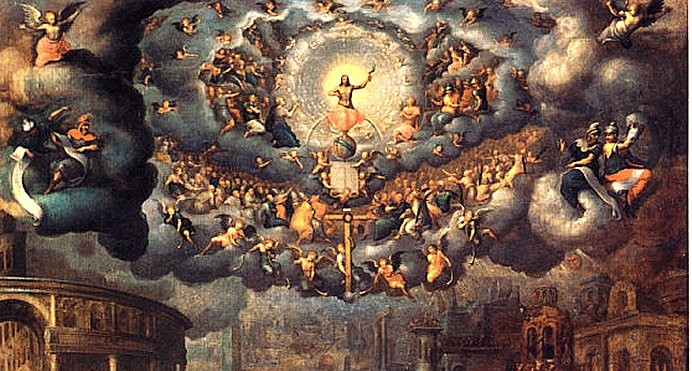
    Cover image is The Last Judgement by Jean Cousin. Source image found here.


    This essay is part 3 of a three-part series that deals with apocalyptic thought and its influence on modern society. You can read the other essays from the links below:

    Part 1: The Origins of Apocalyptic Thinking

    Part 2: Who Was the Historical Jesus


    This essay develops themes explored more fully in my recently published book, The Last Apocalypse: Consciousness, Revelation, and the Future of Humanity.

    Buy my book here

  • Who Was the Historical Jesus?

    In the previous essay, we explored ancient Jewish apocalypticism and saw that the concept of the apocalypse originally meant much more than simply the destruction of the world. It was a way of understanding history, one in which God would intervene, evil would be defeated, the dead would be raised, and a new age would emerge. In this essay we’re going to continue that discussion by looking at how the message of Jesus fits squarely in the framework of apocalypticism.

    Who was the Historical Jesus

    Specifically, we’re going to ask a question that has occupied scholars for more than a century: Who was the historical Jesus? This may sound like a strange question. After all, haven’t billions of people already answered it? Christians believe Jesus was the Son of God, the Messiah, and the savior of humanity. But historians ask a slightly different question. They want to know who Jesus was within his own historical context, before centuries of doctrine and theology accumulated around him.

    To do that, we need to place Jesus back into the world in which he lived. He was not a modern American Christian. He was not a medieval Catholic. He was not a Protestant reformer. He was a first-century Jew living under Roman occupation during the Second Temple Period. And when we place him back into that world, a different picture begins to emerge.

    The scholar most responsible for this shift was Albert Schweitzer. In 1906, he published a landmark study arguing that Jesus was best understood as an apocalyptic prophet. More than a century later, this remains the dominant view among New Testament scholars. While there is disagreement over some of the details, most scholars agree that Jesus proclaimed the imminent arrival of the Kingdom of God and believed that history was approaching a dramatic turning point.

    That conclusion may surprise many modern Christians, because when people think of Jesus today, they often think of a moral teacher, a miracle worker, or a divine savior. But for Jesus and his earliest followers, the coming Kingdom of God was central to their belief. It was the lens through which they understood the world.

    Reconstructing Jesus

    Before we get to Jesus himself, however, we need to briefly discuss how historians know anything about him at all. Unlike many figures from antiquity, we actually possess a substantial amount of information about Jesus. We have the letters of Paul, written roughly twenty years after Jesus’ death. We have the four canonical gospels. We have the Book of Acts. And we even have a few references outside the Bible, most notably from the Jewish historian Josephus.

    None of these sources are perfect, however. The gospels were not written as modern biographies. They are theological documents written by believers who were trying to persuade others of who they thought Jesus was. But historians work with imperfect sources all the time. The task is to compare these different traditions, identify points of agreement, and reconstruct what is most likely historical.

    When we do that, a handful of facts emerge that are accepted by an overwhelming majority of scholars. Jesus was a real historical person. He was from Nazareth. He was baptized by John the Baptist. He carried out a ministry primarily in Galilee. He traveled to Jerusalem around Passover. And he was executed by the Romans through crucifixion. But the real question for us is not whether Jesus existed, it is instead ‘what was his message?’

    John the Baptist and the Apocalyptic Movement

    To answer this question, it helps to look at another important figure from Jesus’s time, John the Baptist, and Jesus’s relationship with him. John appears not only in the gospels but also in the writings of Josephus, giving us strong evidence that he was a real historical figure. His message was straightforward and urgent: repent, because the Kingdom of Heaven is near.

    In Matthew’s gospel we read:

    “In those days came John the Baptist, preaching in the wilderness of Judaea, and saying, Repent ye: for the kingdom of heaven is at hand.”

    And in Luke’s version, John becomes even more dramatic:

    “And now also the axe is laid unto the root of the trees: every tree therefore which bringeth not forth good fruit is hewn down, and cast into the fire.”

    This is classic apocalyptic language. Judgment is coming and the old order is about to be overturned. But what is also noteworthy is John’s response when people ask him what they should do about the coming judgement, his answer isn’t complicated theology. He tells people to share what they have with those in need. If you have two coats, give one away. If you have food, share it.

    In other words, apocalyptic expectation is immediately tied to ethical action. This pattern becomes central to Jesus’s message as well: the Kingdom is coming so we must change how we live.

    The Original Gospel

    Jesus’ public ministry begins immediately after John the Baptist’s. In fact, one of the strongest pieces of evidence that Jesus belonged to the broader apocalyptic movement is that he was baptized by John himself. This was probably an embarrassing fact for later Christians, because if Jesus was sinless and greater than John, why would he submit to John’s baptism? Yet the story appears in all four gospels. Historians often see this as a sign that it is likely authentic.

    After John’s arrest, Jesus takes up the message and begins proclaiming it throughout Galilee. Mark, which most scholars believe was the earliest gospel, summarizes Jesus’ message in just a few lines:

    “Now after that John was put in prison, Jesus came into Galilee, preaching the gospel of the kingdom of God, and saying, The time is fulfilled, and the kingdom of God is at hand: repent ye, and believe the gospel.”

    This is a remarkable passage because it tells us what Jesus himself considered to be the “good news.” Notice that it is not yet about his death, resurrection, or salvation through faith. Those ideas would become central to later Christian theology. Here, the good news is that the Kingdom of God is arriving. The original gospel or good news was an announcement that a new age was breaking into history, that God’s reign was beginning, and the old world was passing away.

    Luke’s gospel preserves a similar moment. Jesus stands in a synagogue and reads from the prophet Isaiah:

    “The Spirit of the Lord is upon me, because he hath anointed me to preach the gospel to the poor… to heal the brokenhearted, to preach deliverance to the captives… to set at liberty them that are bruised.”

    Again, the emphasis is not on escaping the world. It is on the arrival of God’s kingdom within the world.

    This helps explain another aspect of Jesus’ ministry that often confuses modern readers: his miracles. Many people today see the miracles primarily as proof that Jesus was divine. But from an apocalyptic perspective, they served another purpose. They were signs that God’s kingdom was already beginning to break into the present age. When John sends messengers to see if Jesus is the Messiah, Jesus responds:

    “Go and shew John again those things which ye do hear and see: the blind receive their sight, and the lame walk, the lepers are cleansed, and the deaf hear, the dead are raised up, and the poor have the gospel preached to them.”  

    In Luke 11, Jesus explicitly connects exorcisms to the Kingdom of God when he says:

    “But if I cast out devils by the finger of God, no doubt the kingdom of God is come upon you.”

    For Jesus, these acts were evidence that God’s power was already advancing against the forces of evil. Now, none of this means that Jesus was simply predicting the end of the world. In fact, one of the biggest misconceptions people have about apocalyptic prophets is that they are only interested in destruction. But as we discussed previously, apocalypse was fundamentally about transformation where the old world gives way to a new one.

    Living the Kingdom Now

    Jesus’s response to the coming Kingdom was simple: begin living according to the values of the Kingdom now.  This answer appears throughout his teachings. Love your enemies. Bless those who curse you. Forgive others. Give to the poor. Do not retaliate. Treat others as you would want to be treated. Be merciful. Care for the vulnerable.

    These teachings were not simply timeless moral principles floating in isolation. They were, in Jesus’ view, the way people prepared themselves for God’s coming kingdom. Or perhaps even more importantly, they were the way people began living in that kingdom now.

    One of my favorite examples comes from the Lord’s Prayer. Many of us know the line:

    “Thy kingdom come. Thy will be done in earth, as it is in heaven.”

    Think about what that actually means. The prayer is not asking for escape to Heaven, instead it is committing to implementing God’s will here on Earth. The Kingdom of God is not merely a heavenly destination. It is a vision of a world reordered according to justice, compassion, and the will of God.

    This also helps explain Jesus’ repeated warnings about wealth and power. Again and again, he criticizes systems of domination. He warns that one cannot serve both God and wealth, and he condemns religious leaders who seek status and prestige. He praises generosity. He elevates the poor, the widow, the outcast, and the marginalized.

    In the story of being tempted in the wilderness, Jesus even rejects political domination itself when offered authority over the kingdoms of the world. His vision of the kingdom was not based on conquest, rather it was based on service. Not domination, but compassion. Not power over others, but responsibility toward them.

    A Message for Our Time

    This, I think, is where the historical Jesus still speaks powerfully to our own age. We live in apocalyptic times too. Our anxieties may center on artificial intelligence, climate change, nuclear weapons, pandemics, inequality, and political instability rather than Roman occupation. But the underlying question remains remarkably similar: How should we live during times of uncertainty and upheaval?

    Jesus’ answer was not to withdraw from society. It was not to obsess over dates, predictions, or timelines. It was not to wait passively for rescue. His answer was to begin living the values of the coming kingdom now. We should care for the poor, lift up the vulnerable, love one’s enemies, and build communities grounded in compassion.

    Whether or not Jesus was correct about the timing of God’s intervention, his prescription for navigating turbulent times remains profoundly relevant. As a carpenter myself, I can’t help but appreciate one of the parables attributed to Jesus about two builders.

    “Therefore whosoever heareth these sayings of mine, and doeth them, I will liken him unto a wise man, which built his house upon a rock: and the rain descended, and the floods came, and the winds blew, and beat upon that house; and it fell not: for it was founded upon a rock. And every one that heareth these sayings of mine, and doeth them not, shall be likened unto a foolish man, which built his house upon the sand: and the rain descended, and the floods came, and the winds blew, and beat upon that house; and it fell: and great was the fall of it.”

    We can see in this parable what was truly important for Jesus: for people to hear what he was saying and then act on that. For the historical Jesus, his focus was not on his death and resurrection. It was about hearing his message on the Kingdom’s ethics and putting it into practice.

    What strikes me most is that Jesus’ response to apocalyptic anxiety was not fear. It was action. It was to live as though the Kingdom (or the future you hope for) is already beginning to emerge. Whether one is religious or not, that’s a powerful response to uncertainty. 


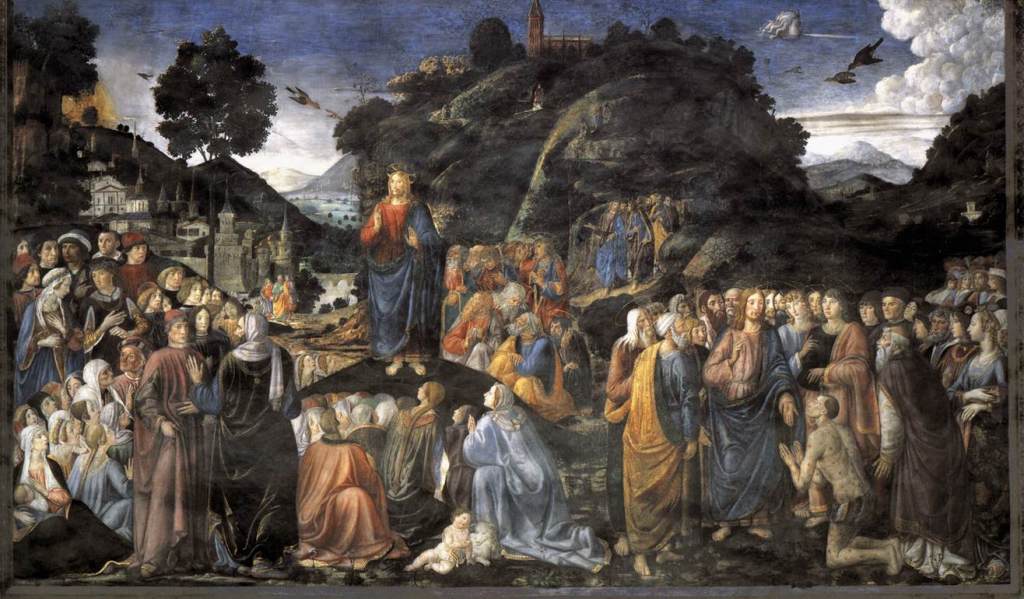
    Cover image is Sermon on the Mount by Cosimo Rosselli, 1482. Source image found here.


    This essay is part two of a three-part series that deals with apocalyptic thought and its influence on modern society. You can read the other essays from the links below:

    Part 1 – The Origins of Apocalyptic Thinking

    Part 3 – Is The Rapture Actually In The Bible?


    This essay develops themes explored more fully in my recently published book, The Last Apocalypse: Consciousness, Revelation, and the Future of Humanity

    Buy my book here

  • Confronting Apocalyptic Anxiety in the Modern World

    There is a persistent anxiety about the end of the world that hangs over our society. It appears in the news, in casual conversations, and across popular culture. Whether the catastrophe takes the form of environmental collapse, artificial intelligence, or nuclear war, many of the forces shaping our world seem to point in a single direction: toward some form of societal rupture or breakdown.

    So it is not surprising that so many people feel this way. The sense that we may be living through a precarious moment, perhaps even an ending, is not irrational. It is a response to real conditions. This blog begins with that recognition. Its aim is not to dismiss these concerns, but to confront them, understand them, and ask whether there might be a path through them.

    I understand that this is not a pleasant topic to think about. Its not a fun topic for me to write about and contemplate. The reason I directly confront it, however, stems from my work as a carpenter. On a construction project, we run into issues all the time. Some of them are problems that would be easier to avoid, but if we did it would just cause us problems later on in the project. So we have to confront them and figure out a solution.

    I feel the same way about what I call “apocalyptic anxiety”, the sense of impending doom that many of us have today. Let’s address it, understand it, and figure out a way forward.

    For me, the answer is not an easy one, and it does not depend on any sudden supernatural intervention. Instead, the work is grounded in ordinary life. It begins with the development of our inner selves,  what I will describe in this project as a kind of “critical spirituality.” From there, it extends outward into how we act, how we relate to others, and how we structure the world around us.

    This is not easy work. It requires effort, reflection, and often a willingness to step outside our comfort zones. It asks us to examine our assumptions, our habits, and our responsibilities to one another. It also demands a broader transformation, social as well as individual, if we are to navigate the risks of the present moment.

    There is no simple program here, and no quick solution. But there is a direction. And we have a chance to see more clearly what kind of future we need to build, and what kind of people we need to become to sustain it.

    That is the purpose of this blog.

    To think through the crisis of our time, and to begin, however imperfectly, the work of building something better…together.
    ____________________________________________

    This essay develops themes explored more fully in my recently published book, The Last Apocalypse: Consciousness, Revelation, and the Future of Humanity.

    Buy my book here