
Author: Brandon Nida

  • Who Was the Historical Jesus?

    In the previous essay, we explored ancient Jewish apocalypticism and saw that the concept of the apocalypse originally meant much more than simply the destruction of the world. It was a way of understanding history, one in which God would intervene, evil would be defeated, the dead would be raised, and a new age would emerge. In this essay we’re going to continue that discussion by looking at how the message of Jesus fits squarely in the framework of apocalypticism.

    Who was the Historical Jesus

    Specifically, we’re going to ask a question that has occupied scholars for more than a century: Who was the historical Jesus? This may sound like a strange question. After all, haven’t billions of people already answered it? Christians believe Jesus was the Son of God, the Messiah, and the savior of humanity. But historians ask a slightly different question. They want to know who Jesus was within his own historical context, before centuries of doctrine and theology accumulated around him.

    To do that, we need to place Jesus back into the world in which he lived. He was not a modern American Christian. He was not a medieval Catholic. He was not a Protestant reformer. He was a first-century Jew living under Roman occupation during the Second Temple Period. And when we place him back into that world, a different picture begins to emerge.

    The scholar most responsible for this shift was Albert Schweitzer. In 1906, he published a landmark study arguing that Jesus was best understood as an apocalyptic prophet. More than a century later, this remains the dominant view among New Testament scholars. While there is disagreement over some of the details, most scholars agree that Jesus proclaimed the imminent arrival of the Kingdom of God and believed that history was approaching a dramatic turning point.

    That conclusion may surprise many modern Christians, because when people think of Jesus today, they often think of a moral teacher, a miracle worker, or a divine savior. But for Jesus and his earliest followers, the coming Kingdom of God was central to their belief. It was the lens through which they understood the world.

    Reconstructing Jesus

    Before we get to Jesus himself, however, we need to briefly discuss how historians know anything about him at all. Unlike many figures from antiquity, we actually possess a substantial amount of information about Jesus. We have the letters of Paul, written roughly twenty years after Jesus’ death. We have the four canonical gospels. We have the Book of Acts. And we even have a few references outside the Bible, most notably from the Jewish historian Josephus.

    None of these sources are perfect, however. The gospels were not written as modern biographies. They are theological documents written by believers who were trying to persuade others of who they thought Jesus was. But historians work with imperfect sources all the time. The task is to compare these different traditions, identify points of agreement, and reconstruct what is most likely historical.

    When we do that, a handful of facts emerge that are accepted by an overwhelming majority of scholars. Jesus was a real historical person. He was from Nazareth. He was baptized by John the Baptist. He carried out a ministry primarily in Galilee. He traveled to Jerusalem around Passover. And he was executed by the Romans through crucifixion. But the real question for us is not whether Jesus existed, it is instead ‘what was his message?’

    John the Baptist and the Apocalyptic Movement

    To answer this question, it helps to look at another important figure from Jesus’s time, John the Baptist, and Jesus’s relationship with him. John appears not only in the gospels but also in the writings of Josephus, giving us strong evidence that he was a real historical figure. His message was straightforward and urgent: repent, because the Kingdom of Heaven is near.

    In Matthew’s gospel we read:

    “In those days came John the Baptist, preaching in the wilderness of Judaea, and saying, Repent ye: for the kingdom of heaven is at hand.”

    And in Luke’s version, John becomes even more dramatic:

    “And now also the axe is laid unto the root of the trees: every tree therefore which bringeth not forth good fruit is hewn down, and cast into the fire.”

    This is classic apocalyptic language. Judgment is coming and the old order is about to be overturned. But what is also noteworthy is John’s response when people ask him what they should do about the coming judgement, his answer isn’t complicated theology. He tells people to share what they have with those in need. If you have two coats, give one away. If you have food, share it.

    In other words, apocalyptic expectation is immediately tied to ethical action. This pattern becomes central to Jesus’s message as well: the Kingdom is coming so we must change how we live.

    The Original Gospel

    Jesus’ public ministry begins immediately after John the Baptist’s. In fact, one of the strongest pieces of evidence that Jesus belonged to the broader apocalyptic movement is that he was baptized by John himself. This was probably an embarrassing fact for later Christians, because if Jesus was sinless and greater than John, why would he submit to John’s baptism? Yet the story appears in all four gospels. Historians often see this as a sign that it is likely authentic.

    After John’s arrest, Jesus takes up the message and begins proclaiming it throughout Galilee. Mark, which most scholars believe was the earliest gospel, summarizes Jesus’ message in just a few lines:

    “Now after that John was put in prison, Jesus came into Galilee, preaching the gospel of the kingdom of God, and saying, The time is fulfilled, and the kingdom of God is at hand: repent ye, and believe the gospel.”

    This is a remarkable passage because it tells us what Jesus himself considered to be the “good news.” Notice that it is not yet about his death, resurrection, or salvation through faith. Those ideas would become central to later Christian theology. Here, the good news is that the Kingdom of God is arriving. The original gospel or good news was an announcement that a new age was breaking into history, that God’s reign was beginning, and the old world was passing away.

    Luke’s gospel preserves a similar moment. Jesus stands in a synagogue and reads from the prophet Isaiah:

    “The Spirit of the Lord is upon me, because he hath anointed me to preach the gospel to the poor… to heal the brokenhearted, to preach deliverance to the captives… to set at liberty them that are bruised.”

    Again, the emphasis is not on escaping the world. It is on the arrival of God’s kingdom within the world.

    This helps explain another aspect of Jesus’ ministry that often confuses modern readers: his miracles. Many people today see the miracles primarily as proof that Jesus was divine. But from an apocalyptic perspective, they served another purpose. They were signs that God’s kingdom was already beginning to break into the present age. When John sends messengers to see if Jesus is the Messiah, Jesus responds:

    “Go and shew John again those things which ye do hear and see: the blind receive their sight, and the lame walk, the lepers are cleansed, and the deaf hear, the dead are raised up, and the poor have the gospel preached to them.”  

    In Luke 11, Jesus explicitly connects exorcisms to the Kingdom of God when he says:

    “But if I cast out devils by the finger of God, no doubt the kingdom of God is come upon you.”

    For Jesus, these acts were evidence that God’s power was already advancing against the forces of evil. Now, none of this means that Jesus was simply predicting the end of the world. In fact, one of the biggest misconceptions people have about apocalyptic prophets is that they are only interested in destruction. But as we discussed previously, apocalypse was fundamentally about transformation where the old world gives way to a new one.

    Living the Kingdom Now

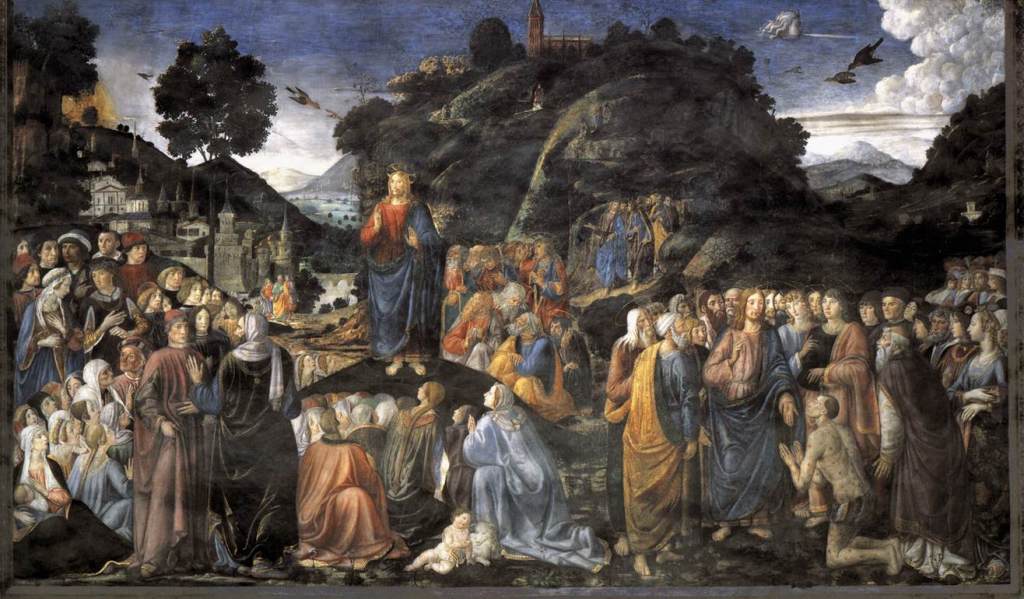
    Jesus’s response to the coming Kingdom was simple: begin living according to the values of the Kingdom now.  This answer appears throughout his teachings. Love your enemies. Bless those who curse you. Forgive others. Give to the poor. Do not retaliate. Treat others as you would want to be treated. Be merciful. Care for the vulnerable.

    These teachings were not simply timeless moral principles floating in isolation. They were, in Jesus’ view, the way people prepared themselves for God’s coming kingdom. Or perhaps even more importantly, they were the way people began living in that kingdom now.

    One of my favorite examples comes from the Lord’s Prayer. Many of us know the line:

    “Thy kingdom come. Thy will be done in earth, as it is in heaven.”

    Think about what that actually means. The prayer is not asking for escape to Heaven, instead it is committing to implementing God’s will here on Earth. The Kingdom of God is not merely a heavenly destination. It is a vision of a world reordered according to justice, compassion, and the will of God.

    This also helps explain Jesus’ repeated warnings about wealth and power. Again and again, he criticizes systems of domination. He warns that one cannot serve both God and wealth, and he condemns religious leaders who seek status and prestige. He praises generosity. He elevates the poor, the widow, the outcast, and the marginalized.

    In the story of being tempted in the wilderness, Jesus even rejects political domination itself when offered authority over the kingdoms of the world. His vision of the kingdom was not based on conquest, rather it was based on service. Not domination, but compassion. Not power over others, but responsibility toward them.

    A Message for Our Time

    This, I think, is where the historical Jesus still speaks powerfully to our own age. We live in apocalyptic times too. Our anxieties may center on artificial intelligence, climate change, nuclear weapons, pandemics, inequality, and political instability rather than Roman occupation. But the underlying question remains remarkably similar: How should we live during times of uncertainty and upheaval?

    Jesus’ answer was not to withdraw from society. It was not to obsess over dates, predictions, or timelines. It was not to wait passively for rescue. His answer was to begin living the values of the coming kingdom now. We should care for the poor, lift up the vulnerable, love one’s enemies, and build communities grounded in compassion.

    Whether or not Jesus was correct about the timing of God’s intervention, his prescription for navigating turbulent times remains profoundly relevant. As a carpenter myself, I can’t help but appreciate one of the parables attributed to Jesus about two builders.

    “Therefore whosoever heareth these sayings of mine, and doeth them, I will liken him unto a wise man, which built his house upon a rock: and the rain descended, and the floods came, and the winds blew, and beat upon that house; and it fell not: for it was founded upon a rock. And every one that heareth these sayings of mine, and doeth them not, shall be likened unto a foolish man, which built his house upon the sand: and the rain descended, and the floods came, and the winds blew, and beat upon that house; and it fell: and great was the fall of it.”

    We can see in this parable what was truly important for Jesus: for people to hear what he was saying and then act on that. For the historical Jesus, his focus was not on his death and resurrection. It was about hearing his message on the Kingdom’s ethics and putting it into practice.

    What strikes me most is that Jesus’ response to apocalyptic anxiety was not fear. It was action. It was to live as though the Kingdom (or the future you hope for) is already beginning to emerge. Whether one is religious or not, that’s a powerful response to uncertainty. 


    This essay is part two of a three-part series that deals with apocalyptic thought and its influence on modern society. You can read the other essays from the links below:

    Part 1 – The Origins of Apocalyptic Thinking


    This essay develops themes explored more fully in my recently published book, The Last Apocalypse: Consciousness, Revelation, and the Future of Humanity.


    Buy my book here

  • The Origins of Apocalyptic Thinking

    In the past few essays, I’ve primarily focused on secular concerns: artificial intelligence, climate change, pandemics, political polarization, and war. In the next three essays, however, we will turn to the religious and spiritual roots of apocalyptic thinking by exploring ancient Jewish apocalypticism, the historical Jesus, and the modern doctrine of the Rapture.

    Understanding these subjects is important because they continue to shape how millions of people think about the future. Ideas about the end times, divine judgment, the return of Christ, and the ultimate fate of humanity all emerged from this ancient worldview. Yet many modern assumptions about apocalypse differ dramatically from what ancient Jews and early Christians actually believed.

    We have already discussed how the word apocalypse does not originally mean world-ending destruction. In its original sense, the Greek word apokalypsis means an unveiling or revelation. In other words a disclosure of hidden truths. This older meaning is essential not only for understanding ancient Jewish apocalypticism, but also for understanding the ministry of Jesus, which emerged directly from this worldview.

    In this essay, I want to explore how ancient apocalyptic thought developed, what it meant to the people who embraced it, and what it might still have to teach us today. While ancient apocalyptic texts certainly contain visions of destruction and judgment, they are ultimately concerned with transformation. They ask how an upside-down world might be restored and what role human beings play within that process. That question remains just as relevant today.

    The World That Produced Apocalypticism

    To understand ancient Jewish apocalypticism, we first need a basic understanding of the historical world that produced it. Ancient Jewish history is often divided into two major periods: the First Temple Period and the Second Temple Period. The First Temple Period ended in 587 BCE when the Babylonians conquered Jerusalem, destroyed the Temple, and exiled much of the population. This exile became one of the defining moments in Jewish history. Removed from their homeland and surrounded by foreign cultures, Jewish communities were forced to reformulate their identity, traditions, and relationship with God.

    Roughly fifty years later, the Persian king Cyrus the Great conquered Babylon and allowed many Jewish exiles to return home and rebuild the Temple. This began the Second Temple Period, which lasted until the destruction of the Second Temple by the Romans in 70 CE.

    It was during this period that apocalyptic thinking emerged and flourished. Many scholars believe that some of its key features were influenced by contact with Persian religious ideas, particularly Zoroastrianism. Concepts such as cosmic conflict between good and evil, angels and demons, a final judgment, and the resurrection of the dead became increasingly important within Jewish thought.

    These ideas gained additional force during subsequent periods of foreign domination. After the Persians came the Greeks under Alexander the Great, followed by the Romans. As Jewish communities struggled with foreign rule, cultural pressures, and political instability, apocalyptic expectations intensified. Many people came to believe that they were living in the final age of history and that God would soon intervene to establish a new and just order.

    By the first century CE, this apocalyptic worldview had become widespread. It shaped popular expectations, inspired revolutionary movements, and formed the cultural backdrop of Jesus’s ministry. To understand Jesus, early Christianity, and later ideas about the end times, we must first understand this apocalyptic imagination.

    Core Ideas of Apocalypticism

    The Book of Revelation in the Christian New Testament, also known as the Apocalypse of John, is probably the best-known example of apocalyptic literature. As anyone who has ever tried to read it knows, it’s packed full of strange symbols and imagery, and the writing doesn’t quite follow the normal linear path we’re accustomed to with modern literature. While it certainly stands out from the rest of the New Testament, the Book of Revelation was just one of many similarly written texts from the period. 

    One of the defining features of apocalyptic literature is the revelation of heavenly secrets. These revelations typically occur through visions in which a celestial being, often an angel, guides the narrator through the heavens or unveils future events. Through these experiences, hidden truths about God, history, and the structure of reality are revealed.

    The Book of Enoch is one of the best-known examples of this type of literature. Highly influential during the time of Jesus, it illustrates many of the core features of Jewish apocalyptic thought. In Enoch’s visions, the archangel Uriel reveals numerous mysteries: the fall of rebellious angels, the reasons behind the flood, the movements of the heavenly bodies, and future events that will shape human history.

    Importantly, these texts were not focused solely on end-times destruction. While they often contain visions of judgment and catastrophe, these events are only one part of a much larger revelation. The central concern is understanding the hidden structure of reality, God’s purposes in history, and humanity’s place within that story. Reducing apocalyptic literature to just its destructive elements leaves a tremendous amount of meaning by the wayside.

    Another important feature of apocalyptic thought is dualism. By this, I mean the belief that opposing forces of good and evil are actively at work in the world. The forces of good are aligned with God, while the forces of evil are associated with Satan or other hostile spiritual powers. Human beings are caught within this larger cosmic struggle and must decide where their loyalties lie.

    This dualism also had a historical dimension. Ancient Jewish apocalypticists believed they were living in “this age,” a period dominated by injustice, suffering, and evil. Yet they also believed that God would soon intervene in history, overthrow those forces, and inaugurate “the age to come.” This future age would be a renewed creation in which harmony between God, humanity, and the world would be restored.

    This expectation often involved a dramatic social reversal. The powerful would be humbled, the oppressed vindicated, and justice finally established. The destructive aspects of apocalyptic thought emerge from this expectation, but destruction was never viewed as an end in itself. Rather, it was part of a larger process of renewal. If a new structure is to be built where an old one stands, the old structure must first be removed.

    Another central feature of Jewish apocalypticism was the general resurrection of the dead. Ancient Jews did not typically view human beings as immortal souls temporarily inhabiting physical bodies. Instead, a person was understood as a unified whole instead of a body and soul that could be separated from one another. For this reason, their hope was not for a disembodied existence in heaven, but for a future bodily resurrection on Earth.

    Equally important was the belief that this resurrection would be collective. Rather than individuals being judged immediately upon death, the dead would be raised together at the end of the age. At that time, God’s judgment would occur. The righteous would enter the renewed Kingdom of God on Earth, while the wicked would be removed from the new creation.

    This differs significantly from what many modern Christians believe today. In the popular understanding, individuals are judged immediately after death, with the righteous going to Heaven and the unrighteous to Hell. By contrast, the earliest Jewish and Christian apocalyptic expectations centered on the establishment of God’s kingdom on a renewed Earth.

    Conclusion

    So what does all of this mean for us today? One way to think about it is that there are now three very different understandings of what the word apocalypse means.

    For ancient Jews, apocalypse was not primarily about the destruction of the world. Destruction was certainly part of the story, but it was only one part of a larger process of transformation. God would intervene in history, evil would be defeated, the dead would be raised, and a renewed world–the Kingdom of God on Earth–would emerge. The focus was ultimately hopeful. The destruction cleared the way for something better.

    Many modern Christians still retain elements of this older framework, although it has become much more complex over the centuries. Depending on the denomination, there may be a Rapture, a period of tribulation, the return of Jesus, a thousand-year reign, a final battle between good and evil, and then a final judgment. Yet despite the differences, the basic structure remains similar: the present age ends, God intervenes, and a renewed creation emerges in which the faithful live in God’s presence.

    The modern secular understanding is quite different. Here, apocalypse usually means catastrophe without redemption. A nuclear war, climate collapse, zombie outbreak, rogue artificial intelligence, asteroid impact, or some other disaster devastates civilization. The focus is rarely on renewal or transformation. Instead, it is on survival in a world that has become much worse than before. This is the version of apocalypse that dominates modern movies, television shows, and novels.

    And this difference matters. When most people hear the word apocalypse today, they think of destruction. But for ancient Jewish apocalypticists, destruction was never the whole story. Apocalypse was fundamentally about revelation, about hidden truths being unveiled and history moving toward transformation. The catastrophe was only one chapter in a much larger narrative.

    In many ways, I think this older understanding has something important to teach us. We live in an age filled with apocalyptic anxiety. We worry about climate change, artificial intelligence, nuclear war, pandemics, and political instability. These fears are real, and they deserve to be taken seriously. But if we focus only on catastrophe, we risk becoming trapped by it.

    The ancient apocalyptic imagination reminds us to ask a different question: not simply what might end, but what might come after. What kind of future are we trying to build, and what role do we play in shaping it?

    That, ultimately, is the question at the heart of my work, research, and writing.


    This essay develops themes explored more fully in my recently published book, The Last Apocalypse: Consciousness, Revelation, and the Future of Humanity.
    Buy my book here

  • Building the Future Now: Confronting Our Greatest Challenges

    In the previous three essays, I have been laying out a path for addressing the major challenges of our time. That path begins at the individual level, with the work of developing ourselves spiritually, emotionally, and ethically. From there, it extends outward into our closest relationships, our communities, our workplaces, our institutions, and ultimately society as a whole.

    The emphasis on individual transformation was never meant to imply that our problems are merely personal. Rather, it reflects the belief that large-scale change begins with the people who participate in and shape the systems around them. If we hope to address the immense social, political, economic, and environmental challenges before us, we need individuals who are capable of acting with wisdom, maturity, compassion, and clarity. Because the reality is that we currently face a number of profound challenges, and how we respond to them over the coming decades will determine the course of human history.

    Thanks for reading A Path Through the Apocalypse! Subscribe for free to receive new posts and support my work.

    The Major Challenges of Our Time

    AI, Work, and Human Purpose

    One of the major challenges humanity may face in the coming decades is the potential for AI-driven unemployment. We are already beginning to see signs of job displacement, particularly in white-collar and entry-level positions. For instance, in the legal profession AI is increasingly performing routine research, document review, and form preparation. A similar pattern is emerging in software development, where AI tools are reducing demand for junior developers while making experienced programmers significantly more productive.

    Other fields are experiencing similar pressures. Translation work, copywriting, customer service, data entry, administrative support, and basic graphic design have all been affected by the growing ability of AI systems to perform tasks that once required human labor. In many cases, the jobs are not disappearing entirely, but fewer workers are needed to produce the same output. A marketing department that once required ten people may now require five. A customer service team of one hundred may be reduced to forty.

    AI may ultimately eliminate a large percentage of existing human jobs, potentially on a scale unprecedented in human history. The deeper issue is not whether AI will eliminate all jobs, but whether society can adapt to a future in which technological progress continuously reduces the amount of human labor required to create goods, services, and information. If productivity continues to rise while employment opportunities shrink, we may be forced to rethink how wealth, opportunity, and purpose are distributed within society.

    A background concern to all of this is wealth inequality. If AI dramatically increases productivity while reducing the need for human labor, who benefits? One possible future is one in which the owners of AI systems–the shareholders, founders, and executives of a relatively small number of companies–capture a disproportionate share of the wealth created. A second group might consist of highly skilled workers who use AI to enhance their productivity to levels we can scarcely imagine today. But where does that leave everyone else?

    This question is particularly important because we already live in a period of severe wealth inequality. Across much of the world, wealth and economic power have become increasingly concentrated in the hands of a small minority. This is already a destabilizing force. If large numbers of people were to find themselves without meaningful employment, reliable income, or a sense of purpose, the social consequences could be profound.

    One of the most commonly proposed solutions is a Universal Basic Income (UBI), in which every person receives a guaranteed income regardless of employment status. UBI may ultimately become necessary in some form, but it raises important questions of its own.

    Who controls the flow of resources? Who determines the amount people receive? Is it enough merely to survive, or enough to live a meaningful and fulfilling life? Does it allow people to travel, pursue education, spend time with family and friends, create art, volunteer in their communities, and explore new possibilities? Or does it simply provide a minimal subsistence while economic and political power become increasingly concentrated elsewhere?

    There is also a deeper question. A society in which most people depend upon a small group of institutions for their livelihood requires a tremendous degree of trust. What happens if political priorities change? What happens if economic crises occur? What happens if those who control the resources come to view the broader population not as fellow citizens, but as dependents, burdens, or obstacles? We already see this sort of ideology right now when it comes to poor and vulnerable communities in our current economy.

    These questions do not mean that UBI is a bad idea. They simply illustrate that income alone may not solve the deeper challenges posed by a future in which human labor is no longer central to economic production. The issue is not only how wealth is distributed, but how power, dignity, purpose, and democratic participation are preserved in an age of intelligent machines. These are profound questions, and I am not sure we are currently prepared to address them with the wisdom and maturity they require.

    AI, Energy, and Environmental Sustainability

    Another immediate concern surrounding AI is its growing demand for energy and water. The data centers that power modern AI systems require enormous amounts of electricity. Large AI data centers can consume as much power as a small city, placing increasing strain on electrical grids that are still largely powered by fossil fuels such as coal and natural gas. As AI development accelerates, so too will the demand for computing power, and with it the demand for energy.

    This raises obvious environmental concerns. If the electricity powering these facilities continues to come primarily from fossil fuels, increased AI adoption could contribute to higher greenhouse gas emissions at precisely the moment when many scientists argue emissions need to be rapidly reduced.

    Water consumption is another issue that receives far less public attention. Data centers generate tremendous amounts of heat and require extensive cooling systems. Many facilities use hundreds of thousands of gallons of water per day, while some of the largest consume millions. Much of this water is lost through evaporation during the cooling process, while the remainder often becomes wastewater that must be treated before being discharged back into the environment.

    These demands place additional pressure on local infrastructure. Supplying large volumes of water to data centers and managing the resulting wastewater can strain municipal systems, particularly in regions already facing water scarcity or aging infrastructure. As AI becomes more deeply integrated into society, questions surrounding energy use, water consumption, environmental sustainability, and environmental justice will become increasingly difficult to ignore.

    There is another aspect of this issue worth considering. Public conversations about climate change have often been shaped by powerful economic interests. Industries whose profits may be affected by environmental regulations have frequently sought to influence public opinion, political decision-making, and the flow of information. This does not mean that every argument made by these industries is wrong, but it does remind us that economic interests often play a significant role in shaping public debate.

    As AI becomes increasingly important to the global economy, the corporations that develop and control these technologies will likely acquire similar influence. They will have strong incentives to shape public policy, public perception, and regulatory frameworks in ways that benefit their interests. Whether the issue is energy consumption, data privacy, labor displacement, environmental impacts, or market competition, we should expect powerful actors to advocate for outcomes that align with their economic goals.

    For this reason, one of the most important skills citizens can develop is the ability to critically evaluate information. We need to become better at distinguishing evidence from propaganda, and at recognizing the interests and incentives that often lie behind public narratives. In an age of increasingly powerful technologies and increasingly sophisticated forms of persuasion, critical thinking is not merely an intellectual virtue, it is also a civic necessity.

    From Climate Change to Global Instability

    These environmental concerns feed directly into broader concerns about climate change. At this point, the central question is no longer whether climate change is occurring, but rather how severe its effects will become and how effectively humanity can adapt to or mitigate them.

    Scientists project a wide range of impacts, including rising temperatures, more frequent and intense heat waves, changing precipitation patterns, increased drought in some regions, heavier flooding in others, sea-level rise, and growing pressure on ecosystems. These changes may place increasing stress on agriculture, water supplies, infrastructure, and public health.

    Climate change may also increase the spread of certain diseases by expanding the range of disease-carrying insects and placing additional strain on health systems. As some regions become more difficult to inhabit due to extreme heat, drought, crop failures, or rising seas, large-scale migration may occur, particularly from equatorial regions and parts of the Global South. Such movements could place additional pressures on receiving countries and contribute to political and social tensions.

    Food security is another concern. Modern civilization depends upon complex and highly interconnected global supply chains. Climate-related disruptions to agriculture, transportation networks, energy systems, or critical infrastructure can create cascading effects that extend far beyond the regions directly affected. Shortages in one area may ripple across continents through trade, markets, and supply networks.

    The result may be increasing societal instability and growing challenges to the resilience of the global system itself. Climate change is therefore not simply an environmental issue. It is also an economic issue, a public health issue, a migration issue, and ultimately a question of political and social stability.

    Political Polarization and Social Fragmentation

    Large-scale migration, economic disruption, rising living costs, resource scarcity, and declining trust in institutions can all place stress on political systems. We are already seeing some of these dynamics emerge in various parts of the world. For example, migration into Europe from Africa and the Middle East has become a major political issue and has contributed to the growth of nationalist and far-right movements in some countries.

    Economic insecurity can produce different political responses. Some people may be drawn toward more collectivist or redistributive economic models, while others may support nationalist, populist, or authoritarian movements that promise stability and order. The specific ideological response often varies from one society to another, but the underlying pattern is similar: periods of uncertainty tend to create fertile ground for political polarization.

    This process can lead to increased conflict and fragmentation within nation-states. Political opponents increasingly come to view one another not simply as people with different opinions, but as existential threats. Compromise becomes more difficult, trust erodes, and institutions come under increasing strain.

    Tribalism plays an important role in this process. As we have discussed elsewhere in this series, human beings have a strong tendency to divide themselves into competing groups. During periods of relative stability, these divisions can often be managed. During periods of crisis, however, tribal identities frequently become stronger and more antagonistic. In such environments, fear and uncertainty can accelerate social fragmentation, making collective action on shared problems increasingly difficult.

    This dynamic also helps explain the rise of apocalyptic thinking. When people perceive that the institutions around them are failing, that their way of life is under threat, or that society itself is becoming unstable, they often begin to imagine the future in catastrophic terms.

    Global Instability, Arms Races, and the Future of War

    Taken together, these trends suggest that we may be moving away from the post-Cold War vision of a rules-based international order and toward a more fragmented world characterized by great-power competition, nationalism, oligarchic concentrations of wealth, and the growing appeal of authoritarian political models. Whether this transition is temporary or long-lasting remains to be seen, but it has become a source of increasing concern for many observers.

    The same insecurities that can drive conflict between individuals can also emerge at the level of nations. Fear, status anxiety, competition for resources, historical grievances, and the desire for recognition do not disappear when human beings act collectively. Instead, they can become embedded within national identities and expressed through diplomacy, economic competition, and, in some cases, military conflict.

    Recent wars have also demonstrated that the nature of warfare is changing. The conflict in Ukraine has revealed the growing importance of drones, autonomous systems, cyber operations, and AI-assisted decision-making. Technologies that were once available only to major powers are becoming increasingly accessible, allowing smaller actors to challenge larger and more technologically advanced opponents through multiple forms of asymmetric warfare.

    At the same time, geopolitical tensions remain high in several regions of the world. Rivalries among major powers, conflicts in the Middle East, disputes over territory and resources, and the continued existence of nuclear arsenals all contribute to an environment of uncertainty. While no one can predict the future, the possibility of escalation remains a persistent concern.

    Most public attention tends to focus on the threat of nuclear war, and for good reason. Yet another emerging concern is the weaponization of artificial intelligence. As AI becomes increasingly integrated into military systems, difficult ethical and strategic questions arise. How much decision-making should be delegated to machines? What happens when autonomous systems make mistakes? And how do nations prevent an arms race in increasingly intelligent and autonomous weapons?

    These questions point to a broader challenge. Humanity’s technological capabilities are advancing rapidly, but it is far less clear that our political institutions, ethical frameworks, and systems of international cooperation are keeping pace.

    From Anxiety to Action

    If the challenges outlined above are real, then addressing them will require changes that go far beyond any single policy proposal. The problems themselves are interconnected, and so must be the solutions.

    A starting point is the growing polarization that characterizes much of public life. We need to become better at evaluating information, distinguishing fact from manipulation, and engaging with people who hold different views. Yet even this is not enough. Throughout this series of essays, I have emphasized the importance of personal growth and what I call critical spirituality. If we are not acting from a place of stability, maturity, self-awareness, and wisdom, then we have little hope of addressing the immense challenges before us.

    There are powerful forces driving many of the trends discussed in this essay. Economic interests, political incentives, media systems, and technological momentum all shape the world around us. It is unlikely that these forces can simply be argued away. In my experience, argument alone rarely changes people. The more effective path is to build something betters that people can see, experience, and participate in for themselves.

    Yet before we can build healthier institutions, we must cultivate the qualities that make them possible. No political system, economic model, or technological solution can substitute for wisdom, compassion, self-awareness, and a genuine concern for the well-being of others. The crises we face are not merely technical problems requiring technical solutions. They are also human problems, rooted in fear, greed, tribalism, and our tendency to prioritize short-term interests over long-term flourishing. If we fail to address these deeper dimensions of human life, we may find ourselves recreating the same problems under new names and within new systems.

    For this reason, I believe that strong communities will be essential in the decades ahead. We need institutions that foster cooperation rather than isolation, mutual aid rather than indifference, and shared purpose rather than endless competition. We need ways of connecting people that are deeper and more meaningful than the forces pulling them apart.

    The challenge posed by AI illustrates this clearly. If automation reduces the need for human labor, then we will need new ways of distributing the wealth generated by increasingly productive technologies. Proposals such as Universal Basic Income, taxes on AI-generated productivity, public ownership stakes in AI companies, or other forms of social wealth-sharing deserve serious consideration. At the same time, we should not lose sight of the value of human craftsmanship, creativity, care, and community. Not everything of value can or should be automated.

    I am also drawn to more localized and cooperative economic models. Worker cooperatives, community-owned enterprises, mutual aid networks, and other democratic forms of economic organization may provide ways of distributing both power and opportunity more broadly. Such approaches will not solve every problem, but they may help create a society in which technological progress benefits everyone rather than a small number of owners.

    These same principles may also help address some of the broader challenges discussed throughout this essay. Strong local communities are often more resilient during periods of disruption. Whether the challenge comes in the form of climate-related disasters, economic shocks, supply-chain disruptions, pandemics, or large-scale migration, communities with strong social ties and local institutions are generally better equipped to adapt. Cooperative enterprises and mutual aid networks can provide support when larger systems become strained, while localized economies may be less vulnerable to disruptions occurring thousands of miles away.

    This does not mean abandoning global cooperation or retreating into isolated localism. Many of the challenges we face, particularly climate change, require coordinated action at national and international levels. Yet resilient local communities can serve as an important foundation upon which broader solutions are built. In an increasingly uncertain world, social cohesion may prove just as important as technological innovation.

    None of this will be easy. Many of these ideas challenge deeply entrenched interests and assumptions. Entire industries are devoted to promoting particular economic and political worldviews. Significant change will require not only new policies, but also a shift in how we think about wealth, work, success, and our obligations to one another.

    Ultimately, the solution to apocalyptic anxiety is not withdrawal, despair, or waiting for someone else to save us. It is the difficult but necessary work of building healthier people, stronger communities, and more humane institutions. If we are entering a period of profound transformation, then the task before us is not merely to survive it, but to help shape what comes next. The future is not something that simply happens to us. It is something we create together, one decision, one relationship, and one community at a time.


    This is part 4 of a four part series on dealing with apocalyptic anxiety. You can find the other parts below:

    Part 1 – Our Fear of AI is Really Fear of Ourselves

    Part 2 – Developing Our Inner Selves: The First Bulwark Against AI Catastrophe

    Part 3 – Putting Critical Spirituality to Work in the World


    This essay develops themes explored more fully in my recently published book, The Last Apocalypse: Consciousness, Revelation, and the Future of Humanity.

    Buy my book here

  • Putting Critical Spirituality to Work in the World

    Introduction

    In the last essay, we explored developing our inner selves as the first bulwark against AI disruption. But inner work alone is not enough. We must put that into action in the world around us–in our relationships, our communities, our institutions, and society as a whole. Our everyday actions and behaviors do not remain isolated. Instead, they accumulate socially and help shape the larger systems of which we are part.

    By rebuilding our communities and strengthening our social fabric, by being involved in the lives of the less fortunate, and by working to address the issues that concern us most, we begin laying the foundation to confront the larger challenges ahead.

    Right now, society is too fractured, divided, distracted, and saturated with misinformation to effectively respond to issues such as environmental degradation, the enormous energy and water demands of AI infrastructure, the threat of mass unemployment, climate change, nuclear escalation, or future pandemics. We cannot meaningfully address these problems without stronger human relationships and healthier communities.

    And if we truly believe that some combination of these threats could place humanity itself at risk, then we should act accordingly.  It is not a question of who is going to go first. If you were in a house that was on fire, you would not stand still waiting to see whether others noticed the flames before deciding to move. You would sound the alarm and begin helping people toward safety. In much the same way, if we genuinely believe our civilization faces profound dangers, then our responsibility is to begin acting now regardless of what others are doing. And perhaps, by acting, speaking, organizing, and building differently, we may encourage others to do the same.

    (Re)Building Community

    In modern society, many of the social bonds that once held communities together have steadily eroded, especially over the last half century. As we work to build healthier communities, we are also rebuilding many of the things people increasingly feel are missing from modern life: trust, belonging, mutual support, resilience, shared meaning, and a greater sense of security and connection.

    One of the most important actions we can take is putting time and effort into our relationships with family and friends. This means being an active listener, showing up for important moments, being present for the good times and the bad. These actions may seem basic, but they form the foundation of strong social ties and deeply influence the people around us.

    Beyond our immediate relationships, there are many ways we can help rebuild the social fabric of our communities. This can include hosting dinners, organizing discussion groups or book clubs, sponsoring neighborhood events, mentoring young people, helping create cooperative enterprises, supporting local art and music scenes, or simply creating spaces where people can gather and genuinely connect with one another.

    Strong communities help reduce loneliness and alienation, foster accountability and mutual care, and weaken the insecurity and tribalism that increasingly dominate modern society. They create support networks that make people and communities more resilient during periods of disruption and instability. Ultimately, healthy communities form the foundation upon which stable and humane societies are built. It is worth the time and effort to get this part right.

    Caring for the Vulnerable

    Another way we can participate in building a better future is by helping lift up vulnerable people within our communities. This not only reconnects us with others–both the people being helped and those doing the helping–but also becomes a way of repairing some of the damage caused by an increasingly fragmented and unequal society. Many of the struggles people face today are deeply interconnected. Addiction, trauma, loneliness, family dysfunction, poverty, and mental illness often reinforce one another rather than existing in isolation.

    There are many different people who need care, support, and human connection: the elderly, the poor, the lonely, the imprisoned, the homeless, the addicted, the mentally ill, people with estranged families, struggling single parents, and many others.  These are people, often with difficult history and circumstances. Understanding and connecting with vulnerable people is important not only because it helps them, but because it helps restore the sense of shared humanity that our increasingly fragmented societies seems to have lost at times.

    This kind of work can take many forms: spending time with isolated elderly people, mentoring young people, supporting addiction recovery, helping struggling families, volunteering in prisons or shelters, or simply being present for people who feel abandoned and unseen. Importantly, this work does not only change the people being helped. It changes us as well. It deepens empathy, emotional awareness, humility, and our understanding of the interconnectedness of human suffering.

    If the future is increasingly shaped by technological systems, then the moral condition of the civilization building those systems matters enormously. A society that abandons vulnerable people, normalizes isolation, and treats human beings as disposable when they no longer fit neatly within the economic system may ultimately reproduce those same values within its institutions and technologies. But a society grounded in compassion, dignity, and mutual care may create something very different.

    Taking Meaningful Action

    One of the most important ways we can push back against helplessness and fragmentation is by directly involving ourselves in meaningful forms of social action. A positive aspect of getting involved is that it helps break us out of the disconnectedness of modern life. It pulls us away, at least in part, from the endless cycle of screens, algorithms, outrage, and passive consumption, and reconnects us with other people and the world around us. Instead of simply drifting anxiously into the future, we begin actively participating in shaping the kind of future we hope to see.

    There are many issues that need people willing to lend a hand: climate work, prison reform and prisoner outreach, food programs, addiction recovery, local organizing, youth mentoring, ecological restoration, elderly care, and the building of mutual aid networks, among many others. The important thing is not that everyone works on the same issue, but that people become engaged somewhere in meaningful ways.

    Many of us may not find deep purpose or fulfillment within our jobs alone, especially within an economic system that often leaves people feeling disconnected from meaningful forms of contribution. But outside of work, we still have the ability to direct our energy toward causes and communities that matter to us. In doing so, we not only help improve the world around us, but also begin reclaiming a sense of agency, connection, and shared responsibility that modern life increasingly erodes.

    Conclusion

    In this essay, I have focused on what we can do as individuals. This is not because I believe the full responsibility rests on ordinary people, but because this is how I have personally learned to deal with my own apocalyptic anxiety.  There needs to be larger systemic change, and ultimately the owners of AI need to be humanity as a whole instead of a few wealthy elites, corporations, and national governments. There ultimately needs to be larger systemic change, and I believe that increasingly powerful technologies like AI should ultimately be governed for the benefit of humanity as a whole rather than controlled by a small number of wealthy elites, corporations, or national governments. But meaningful systemic change rarely emerges out of nowhere. It requires groundwork. It requires relationships, trust, shared understanding, and communities capable of acting together.

    By rebuilding relationships and communities, we begin breaking through the individualistic shell that the digital age has increasingly placed around us. We create spaces where people can talk openly, think together, and resist the distorted and emotionally manipulative information environments created by modern media and social media algorithms. Strong communities make it easier to overcome misinformation, fear, tribalism, and isolation because they reconnect people through direct human relationships rather than purely digital ones.

    Rebuilding community also helps prepare us for some of the immediate disruptions that AI and other technological transformations may bring. Mass unemployment, for example, may eventually require large-scale wealth redistribution, forms of Universal Basic Income, stronger mutual aid systems, and more localized economies capable of supporting people outside mainstream economic structures. There are also major environmental concerns surrounding AI infrastructure itself, including enormous energy demands and water usage that are often pushed onto communities that are poorly equipped to resist exploitation or advocate for their own well-being.

    If we remain fractured, isolated, distracted, and emotionally disconnected from one another, addressing these challenges will become extraordinarily difficult. But if we can rebuild stronger communities grounded in trust, compassion, and shared responsibility, then we may still be capable of shaping a more humane future together.

    ____________________________________________

    This essay develops themes explored more fully in my recently published book, The Last Apocalypse: Consciousness, Revelation, and the Future of Humanity.

    Buy my book here

  • Developing Our Inner Selves: The First Bulwark Against AI Catastrophe

    Introduction

                As discussed in some of my previous essays, one of the primary challenges humanity faces is the emergence of artificial intelligence. My view is that there is likely little we can do to stop its development entirely. There are too many corporations, governments, and institutions involved, all seeking the immense advantages that winning the AI race may provide. What we can do, however, is to work to improve ourselves and the world around us. We need to build a better moral and cultural foundation for the transformation that AI may bring.

                This essay focuses on that first step–working on ourselves. I should say I am not a trained counselor or mental health professional, but someone who has spent a great deal of time reading, reflecting on these issues, and trying to apply them in my own life. There are many excellent books, podcasts, and trained professionals who explore these subjects in much greater depth than I can here. Still, I believe this kind of inner work is deeply important, because emotional instability and insecurity do not remain isolated within individuals. They instead accumulate socially and help shape the kinds of relationships, institutions, and societies we create. The same is also true of emotionally healthy and secure people. 

    Insecurity and the Self

    Personal insecurity drives much of the daily harm that humans inflict on one another. Working in the construction industry, I’ve seen it manifest in many different ways, and it almost always leads to drama, inefficiency, and poor-quality work. The most effective dynamic is when a crew can collaborate openly, challenge ideas, propose alternatives, and then work together to carry out a shared plan. But when a deeply insecure person enters that mix, things can go sideways very quickly.

    This reveals something important: insecurity shapes behavior, behavior shapes relationships, and the relationships between human beings ultimately shape institutions and society. Insecurity often begins at the individual level through feelings such as low self-esteem, inadequacy, and doubt about one’s self-worth. Most people experience these feelings at some point in life, but when they become someone’s primary framework for understanding themselves, they can produce an unstable and insecure sense of identity. This is often combined with difficulty processing complex emotions and weak communication skills.

    These insecurities then manifest outwardly in both personal and professional relationships through toxic communication, belittling others, manipulative behavior, excessive control, or exaggeration of one’s own abilities. Over time, these patterns accumulate into dysfunctional social environments and systems. The problem is far more widespread than many people realize. Modern society often places enormous emphasis on competition, status, and external success, while giving comparatively little attention to emotional health, self-worth, or the development of a healthy identity. Many people also grow up in environments that do not foster confidence, stability, or belonging.

    Thankfully, there are ways to work on these issues, both within ourselves and in how we relate to others. Practices such as mindfulness, identifying the roots of insecurity, separating self-worth from status, developing healthier internal dialogue, cultivating self-compassion, and accepting imperfection can all help create a more stable sense of self. As I said before, there are many excellent books and trained professionals who explore these subjects more deeply than I can here, and I would encourage people to spend time engaging with that work.

    We can also help others through the kinds of relationships and communities we build. Insecurity often weakens when people experience acceptance, belonging, mutual care, and authentic connection. As we work on ourselves, we should also try to shape our relationships and social environments around those principles.

    Identity and Tribalism

    These insecurities do not remain isolated within the individual. Over time, they shape how people construct and defend their identities. Identity is how we see ourselves in relation to others. We understand ourselves through many overlapping frameworks at once, including our profession, intelligence, gender, ideology, social status, trauma, successes and failures, and even the personas we construct online. Identity is not inherently negative or positive. It can provide stability, meaning, belonging, and purpose. But when one’s identity is hardened around a label and/or is insecure, it can also become deeply destabilizing and a source of conflict.

    Insecure identity can distort perception, because people begin filtering reality through the need to defend or reinforce their sense of self. This often contributes to tribalism, where identity is maintained through rigid in-group and out-group dynamics. Over time, this can produce dehumanization, as people stop seeing others as fully human individuals and instead reduce them to ideological or cultural enemies. Once empathy and mutual understanding begin to break down, conflict often intensifies because the other side is increasingly viewed as dangerous, evil, or fundamentally alien.

    Modern society is deeply identity-driven, and online culture and politics increasingly intensify these tendencies. Social media algorithms are designed to reinforce our existing beliefs, preferences, and emotional reactions, often surrounding us with people who think and behave similarly to ourselves. Online spaces also allow people to construct carefully curated or exaggerated versions of themselves, where identity can become increasingly performative and rigid. Nationalism, ideology, political affiliation, and even lifestyle choices increasingly become central to how people define themselves and distinguish themselves from others. As these identities harden, empathy, nuance, and openness to critique often begin to break down.

    The algorithms that shape much of our news and entertainment frequently reinforce these dynamics by repeatedly feeding people content aligned with their existing worldview. Because outrage, fear, tribal conflict, and threats to identity generate strong emotional engagement, those forms of content are often amplified the most. Over time, this can create echo chambers where identities harden while becoming increasingly insulated from outside perspectives and meaningful critique.

    So what does a healthy identity look like? It means holding one’s identity with humility and openness rather than treating it as something absolute or fragile. A healthy identity remains capable of growth, self-critique, and genuine engagement with others. It allows us to see people fully rather than reducing ourselves or others to labels alone.

    Emotional Health in an Age of Anxiety

    In general, we should be working to build greater emotional awareness, inner stability, and mindfulness. This is difficult to do in modern life, where many people exist in a constant state of stress and overstimulation. Alarm clocks, traffic, deadlines, financial pressures, and nonstop streams of information all place enormous demands on our attention and emotional energy. At the same time, we are constantly bombarded with negative news from around the world, often delivered in ways specifically designed to provoke fear, outrage, or anxiety. Over time, this can leave people emotionally exhausted and psychologically overwhelmed.

    Another major issue we must contend with is alienation. Many people in modern society feel disconnected–psychologically, emotionally, socially, or spiritually–from other people, from meaningful work, from community, from nature, from themselves, and even from society as a whole. Modern technological life has connected the world in many ways, yet many people simultaneously feel more isolated and emotionally distant than ever before. Relationships can become increasingly transactional and mediated through screens, while opportunities for genuine community and meaningful human connection are becoming scarcer.

    Closely connected to this is the problem of attention fragmentation. We live in a world where countless distractions constantly compete for our attention. Algorithms are designed to keep us engaged with our phones and devices for as long as possible, feeding us endless cycles of stimulation, outrage, novelty, and emotional reaction. As a result, many people rarely experience boredom, silence, or stillness anymore, which is necessary for deep thought and creativity. We are constantly consuming information, yet often struggle to think deeply about what we are consuming. The rapid and chaotic flow of modern news and media can make it difficult to meaningfully process the world around us, producing a constant sense of anxiety and disorientation.

    Loneliness has also become a major issue in modern society. I struggle with this myself. I work all week, and then spend much of my weekends writing these essays and thinking through these ideas. I often have to consciously push myself out of my comfort zone to spend time with friends, meet new people, or simply reconnect socially. I suspect many others experience something similar. Modern life can easily push people into isolated routines where work, phone and computer screens, exhaustion, and stress gradually replace deeper forms of community and human connection.

    Our Relation to Others

    When we are emotionally fragmented, insecure, or overwhelmed, it becomes far more difficult to see other people clearly and compassionately. As we develop ourselves and gain a more accurate understanding of who we are, it becomes easier to see others clearly as well. We begin to recognize people as fully human, with both strengths and flaws, rather than reducing them to stereotypes or labels. It allows us to better understand and appreciate differences, becoming less threatened by ideas, beliefs, or behaviors that are unfamiliar to us. It also encourages us to think more deeply about people’s backgrounds and circumstances, and how these shape their behavior and experiences in the present. All of this gives us a fuller picture of the people around us and helps us relate to them in more compassionate and constructive ways.

    One of the traditional narratives surrounding Siddhartha Gautama tells of a prophecy made before his birth. A wise man foretold to his father that Siddhartha would either become a great world ruler–a cakkavatti–or a great spiritual teacher who would help liberate humanity from suffering. Wanting his son to become a powerful ruler, Siddhartha’s father attempted to shield him from the harsh realities of the world, surrounding him with luxury and keeping suffering hidden from him.

    But Siddhartha eventually encountered sickness, aging, and death, which set him on a different path. According to some Buddhist traditions, as Siddhartha prepared to leave palace life behind, Māra appeared and tempted him with the promise of worldly power, telling him he could still become a great ruler if he abandoned his spiritual quest. Siddhartha rejected this path and instead chose to seek enlightenment and understanding.

    In many ways, we face a similar choice in our own lives. Perhaps not on the grand scale found in the Buddha’s story, but in the countless interpersonal situations we encounter every day. Do we use our power, authority, and relationships primarily to elevate ourselves and reinforce our status, or do we use them to help others and improve the world around us? Do we act through domination, ego, and control, or through compassion, wisdom, and service?

    Beyond Reactive Thinking

    Compassion and wisdom require not only emotional maturity, but also a deeper understanding of the systems and histories shaping the our society. So, another important part of developing ourselves is learning to move beyond superficial understandings of the world around us. The more knowledge we develop about history, culture, politics, economics, the environment, and human behavior, the easier it becomes to make sense of events in ways that more accurately reflect reality. Reading deeply and thinking critically about these subjects allows us to respond more thoughtfully and humanely, rather than purely emotionally or reactively.

    One approach I find useful is what is called “Context Cubed.”[1] This means examining important issues through three different layers of analysis. The first layer is the immediate reporting of an event or issue. This is the level most people encounter through headlines, news clips, social media, and daily reporting. But all media organizations operate within certain frameworks, incentives, and biases, so it is important to seek multiple perspectives rather than relying entirely on a single source or political angle.

    The second layer is the broader contemporary context surrounding the issue. This involves looking beyond immediate headlines and asking deeper questions. What larger political, economic, environmental, or social factors are contributing to the situation? How does it connect to other regions or global systems? What recent events helped produce the current moment? What possible outcomes could emerge from it, both positive and negative? And what solutions might realistically exist?

    The third layer is the deeper historical context. Few major issues emerge out of nowhere. Many contemporary conflicts and crises are rooted in long historical processes that may stretch back decades or centuries. Colonialism, political corruption, economic inequality, resource extraction, foreign intervention, nationalism, debt structures, religious conflict, and environmental exploitation can all shape the conditions we see today. Understanding these deeper historical forces helps us move beyond simplistic narratives and react to the world with greater nuance, humility, and compassion.

    Critical Spirituality

    Yet understanding external systems alone is not enough. We must also cultivate an inner orientation capable of responding to the world wisely and compassionately. A major component of this is what I call “critical spirituality.” By this, I mean deepening our understanding of the world’s spiritual traditions while also critically reflecting on our own inner lives and relationship to the world around us. This involves exploring our own sense of connection to something greater than ourselves, whether we call it God, Spirit, cosmic consciousness, the Tao, or something else entirely.

    For me, critical spirituality is not about rigid dogma or blind belief. It is about approaching spirituality with both openness and reflection, drawing wisdom from different traditions while remaining thoughtful and self-aware. It is also about translating spiritual insight into action–meaning how we treat other people, how we understand suffering, and how we choose to live within society.

    I have discussed this idea in greater detail elsewhere and will continue exploring it in future essays, so I will not fully unpack it here. But I believe this kind of spiritual development is essential if we hope to build a healthier foundation for the future.

    Conclusion

    Emotional and spiritual health are not merely personal concerns. They are foundational to the kinds of societies, systems, and technologies human beings create. As AI emerges it will reflect our own human civilization. We know that individual instability scales up socially, and that insecurity/tribalism/alienation shape institutions. But compassion and wisdom can also scale socially. In this regard, inner work is not escapism. Instead, emotional development is civilizational work. This is because the future depends on the kind of people building it.


    [1] I did not originate this idea, I got it from a random YouTube video that I currently cannot find. I will try and locate the original source and link it.


     This essay develops themes explored more fully in my recently published book, The Last Apocalypse: Consciousness, Revelation, and the Future of Humanity.

    Buy my book here