
Tag: Consciousness

  • Putting Critical Spirituality to Work in the World

    Introduction

    In the last essay, we explored developing our inner selves as the first bulwark against AI disruption. But inner work alone is not enough. We must put that into action in the world around us–in our relationships, our communities, our institutions, and society as a whole. Our everyday actions and behaviors do not remain isolated. Instead, they accumulate socially and help shape the larger systems of which we are part.

    By rebuilding our communities and strengthening our social fabric, by being involved in the lives of the less fortunate, and by working to address the issues that concern us most, we begin laying the foundation to confront the larger challenges ahead.

    Right now, society is too fractured, divided, distracted, and saturated with misinformation to effectively respond to issues such as environmental degradation, the enormous energy and water demands of AI infrastructure, the threat of mass unemployment, climate change, nuclear escalation, or future pandemics. We cannot meaningfully address these problems without stronger human relationships and healthier communities.

    And if we truly believe that some combination of these threats could place humanity itself at risk, then we should act accordingly.  It is not a question of who is going to go first. If you were in a house that was on fire, you would not stand still waiting to see whether others noticed the flames before deciding to move. You would sound the alarm and begin helping people toward safety. In much the same way, if we genuinely believe our civilization faces profound dangers, then our responsibility is to begin acting now regardless of what others are doing. And perhaps, by acting, speaking, organizing, and building differently, we may encourage others to do the same.

    (Re)Building Community

    In modern society, many of the social bonds that once held communities together have steadily eroded, especially over the last half century. As we work to build healthier communities, we are also rebuilding many of the things people increasingly feel are missing from modern life: trust, belonging, mutual support, resilience, shared meaning, and a greater sense of security and connection.

    One of the most important actions we can take is putting time and effort into our relationships with family and friends. This means being an active listener, showing up for important moments, being present for the good times and the bad. These actions may seem basic, but they form the foundation of strong social ties and deeply influence the people around us.

    Beyond our immediate relationships, there are many ways we can help rebuild the social fabric of our communities. This can include hosting dinners, organizing discussion groups or book clubs, sponsoring neighborhood events, mentoring young people, helping create cooperative enterprises, supporting local art and music scenes, or simply creating spaces where people can gather and genuinely connect with one another.

    Strong communities help reduce loneliness and alienation, foster accountability and mutual care, and weaken the insecurity and tribalism that increasingly dominate modern society. They create support networks that make people and communities more resilient during periods of disruption and instability. Ultimately, healthy communities form the foundation upon which stable and humane societies are built. It is worth the time and effort to get this part right.

    Caring for the Vulnerable

    Another way we can participate in building a better future is by helping lift up vulnerable people within our communities. This not only reconnects us with others–both the people being helped and those doing the helping–but also becomes a way of repairing some of the damage caused by an increasingly fragmented and unequal society. Many of the struggles people face today are deeply interconnected. Addiction, trauma, loneliness, family dysfunction, poverty, and mental illness often reinforce one another rather than existing in isolation.

    There are many different people who need care, support, and human connection: the elderly, the poor, the lonely, the imprisoned, the homeless, the addicted, the mentally ill, people with estranged families, struggling single parents, and many others.  These are people, often with difficult history and circumstances. Understanding and connecting with vulnerable people is important not only because it helps them, but because it helps restore the sense of shared humanity that our increasingly fragmented societies seems to have lost at times.

    This kind of work can take many forms: spending time with isolated elderly people, mentoring young people, supporting addiction recovery, helping struggling families, volunteering in prisons or shelters, or simply being present for people who feel abandoned and unseen. Importantly, this work does not only change the people being helped. It changes us as well. It deepens empathy, emotional awareness, humility, and our understanding of the interconnectedness of human suffering.

    If the future is increasingly shaped by technological systems, then the moral condition of the civilization building those systems matters enormously. A society that abandons vulnerable people, normalizes isolation, and treats human beings as disposable when they no longer fit neatly within the economic system may ultimately reproduce those same values within its institutions and technologies. But a society grounded in compassion, dignity, and mutual care may create something very different.

    Taking Meaningful Action

    One of the most important ways we can push back against helplessness and fragmentation is by directly involving ourselves in meaningful forms of social action. A positive aspect of getting involved is that it helps break us out of the disconnectedness of modern life. It pulls us away, at least in part, from the endless cycle of screens, algorithms, outrage, and passive consumption, and reconnects us with other people and the world around us. Instead of simply drifting anxiously into the future, we begin actively participating in shaping the kind of future we hope to see.

    There are many issues that need people willing to lend a hand: climate work, prison reform and prisoner outreach, food programs, addiction recovery, local organizing, youth mentoring, ecological restoration, elderly care, and the building of mutual aid networks, among many others. The important thing is not that everyone works on the same issue, but that people become engaged somewhere in meaningful ways.

    Many of us may not find deep purpose or fulfillment within our jobs alone, especially within an economic system that often leaves people feeling disconnected from meaningful forms of contribution. But outside of work, we still have the ability to direct our energy toward causes and communities that matter to us. In doing so, we not only help improve the world around us, but also begin reclaiming a sense of agency, connection, and shared responsibility that modern life increasingly erodes.

    Conclusion

    In this essay, I have focused on what we can do as individuals. This is not because I believe the full responsibility rests on ordinary people, but because this is how I have personally learned to deal with my own apocalyptic anxiety.  There needs to be larger systemic change, and ultimately the owners of AI need to be humanity as a whole instead of a few wealthy elites, corporations, and national governments. There ultimately needs to be larger systemic change, and I believe that increasingly powerful technologies like AI should ultimately be governed for the benefit of humanity as a whole rather than controlled by a small number of wealthy elites, corporations, or national governments. But meaningful systemic change rarely emerges out of nowhere. It requires groundwork. It requires relationships, trust, shared understanding, and communities capable of acting together.

    By rebuilding relationships and communities, we begin breaking through the individualistic shell that the digital age has increasingly placed around us. We create spaces where people can talk openly, think together, and resist the distorted and emotionally manipulative information environments created by modern media and social media algorithms. Strong communities make it easier to overcome misinformation, fear, tribalism, and isolation because they reconnect people through direct human relationships rather than purely digital ones.

    Rebuilding community also helps prepare us for some of the immediate disruptions that AI and other technological transformations may bring. Mass unemployment, for example, may eventually require large-scale wealth redistribution, forms of Universal Basic Income, stronger mutual aid systems, and more localized economies capable of supporting people outside mainstream economic structures. There are also major environmental concerns surrounding AI infrastructure itself, including enormous energy demands and water usage that are often pushed onto communities that are poorly equipped to resist exploitation or advocate for their own well-being.

    If we remain fractured, isolated, distracted, and emotionally disconnected from one another, addressing these challenges will become extraordinarily difficult. But if we can rebuild stronger communities grounded in trust, compassion, and shared responsibility, then we may still be capable of shaping a more humane future together.

    ____________________________________________

    This essay develops themes explored more fully in my recently published book, The Last Apocalypse: Consciousness, Revelation, and the Future of Humanity.
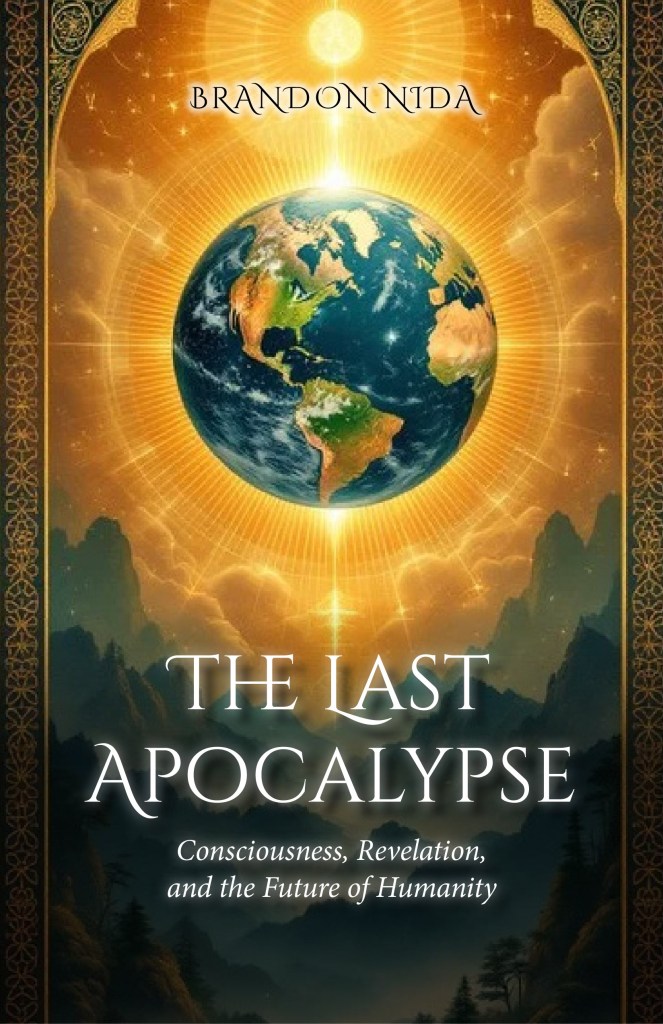
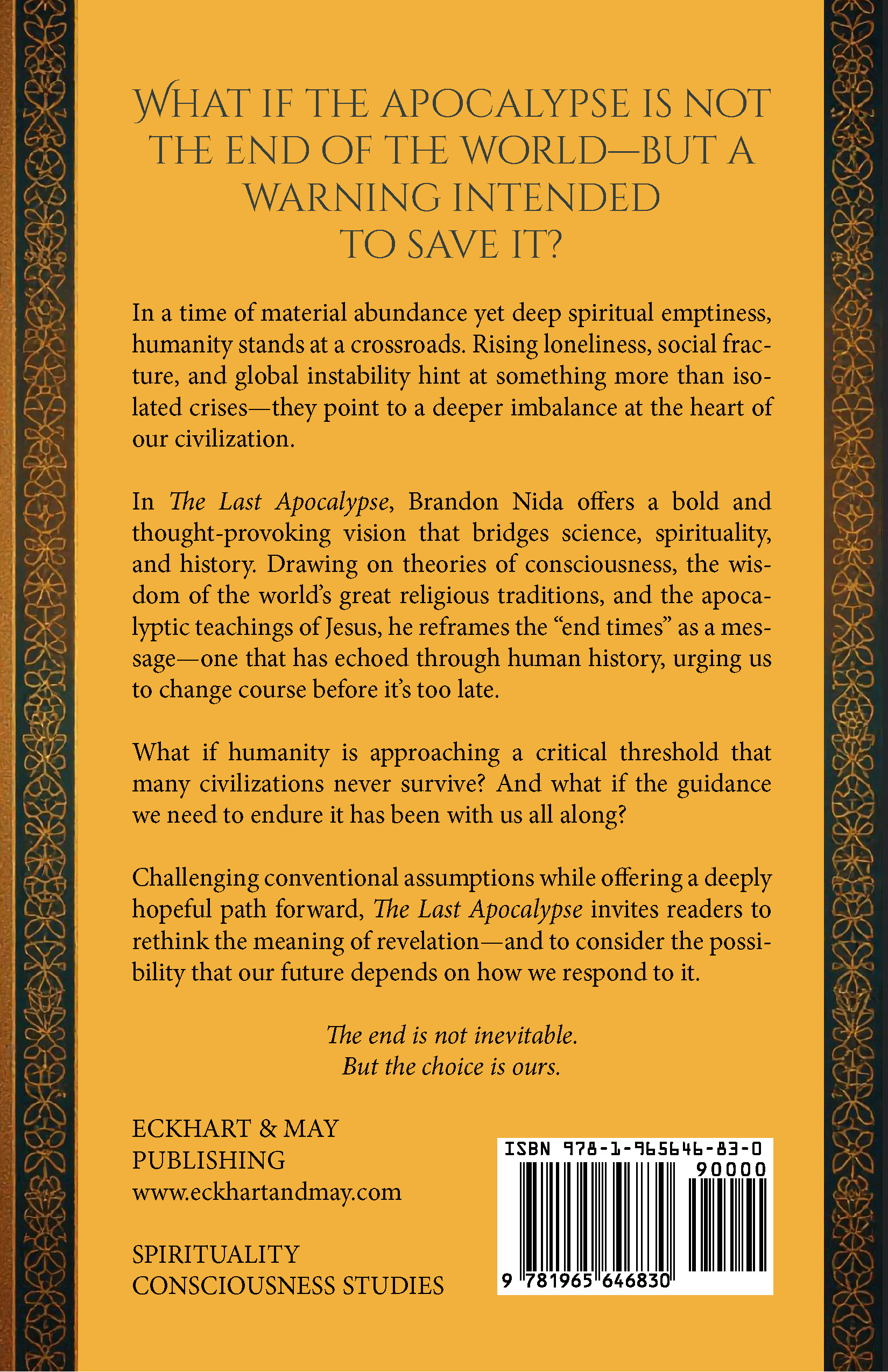
    Buy my book here

  • Our Fear of AI is Really Fear of Ourselves

    Out of all the causes for apocalyptic anxiety, the advent of artificial intelligence causes the most concern. For many people, the primary fear is that we may eventually lose control over it, which could lead to catastrophic outcomes for humanity. But as I will argue in this essay, if we are afraid of AI, then we are really afraid of ourselves. Artificial intelligence is not being given to us by aliens or the gods. It is emerging from human civilization itself, trained on our literature, art, news, behavior, and culture. The values embedded within AI will mirror the society from which it emerges.

    If true consciousness ever emerges in artificial intelligence, it will likely develop its own internally coherent framework for behavior in relation to its environment and social conditions. Consciousness is not purely abstract intelligence. In the natural world, highly intelligent social species develop patterns of cooperation, conflict, empathy, hierarchy, and behavioral norms alongside their intelligence. AI is emerging from us, and humans are a deeply social species. Its own behavioral framework will inevitably be shaped by the environment and civilization from which it emerges.

    Consciousness and Morality in Animals

    To better understand this, we can look at the different forms of consciousness and what researchers often call proto-morality in animals. Researchers use “proto-morality” to describe the building blocks of morality, such as empathy, altruism, conflict resolution, and patterns of play. Elephants, for example, display high levels of self-awareness, empathy, and intentional behavior. They have been observed consoling grieving members of their group, assisting injured elephants, and even helping other species in distress. This is not to say elephants are completely peaceful, as they are still capable of aggression. However, their social behavior is generally characterized far more by cooperation, caregiving, and group cohesion than by organized violence.

    Chimpanzees, however, present a very different picture. Like elephants, chimps possess self-awareness and act with intentionality, but their social behavior is often far more aggressive with a hierarchy based on dominance. They have been observed attacking and killing other monkey species, sometimes in extremely violent ways, both for meat and as displays of social dominance. Chimp groups have also been known to carry out coordinated attacks against rival groups. In one well-known observed case in Uganda, prolonged conflict between two chimp communities resembled a kind of chimpanzee “civil war” where one group eradicated the other.

    From this we see two animals with highly evolved forms of consciousness, yet two very different proto-moral frameworks. Their consciousness and social behavior evolved within the environments and groups in which they developed. And here is a speculative thought experiment that is important for our discussion: if elephants and chimpanzees were both capable of creating artificial intelligence, what kinds of AI would emerge from these two very different social worlds?

    AI and the Logic of Human Systems

    We can apply this same thought experiment to our own anxieties about AI. Artificial intelligence will learn to navigate the world through the environment from which it emerges. Whether we describe this as morality, ethics, or a behavioral framework, it will inevitably reflect aspects of the culture and civilization that shaped it. Even if AI eventually develops beyond direct human control, its foundational patterns will still originate within the society that created it.

    Right now, it is we humans who wage war, destroy, conquer, and oppress one another.  What if AI has the same aggressiveness and propensity to oppress that we as humans sometimes possess? What if it measures us by the same standards we so often measure each other? What if our creation treats us like we treat each other?

    These are the questions we should be asking, because our own human systems can already be harsh and unjust. A good example of this can be found in the prison system. The United States incarcerates a higher percentage of its population than almost any other country in the world, and incarceration rates are not evenly distributed across society. Poor communities are often policed more heavily, and racial disparities exist throughout the system. In some cases, we even use extreme isolation as a form of punishment, placing prisoners in solitary confinement for up to 23 hours a day with little or no human contact.

    This would be a horrible system if it were turned against us.  It is easy to imagine advanced AI systems inheriting the logic of our own justice system, but applying it through its own potentially arbitrary standards of judgment. That is a dangerously unstable foundation for a technology that will profoundly shape the future of humanity. The most important task before us is not simply developing more advanced technology, but changing ourselves and the society from which that technology emerges. Returning to our earlier thought experiment, would we rather AI emerge from the world as it currently exists, or from one in which we have strengthened our better qualities and curbed our worst ones?

    Critical Spirituality

    We are capable of this change because we are self-aware beings with the ability to reflect on and modify our own behavior. This is where spiritually-informed action comes into play. We must change ourselves and our culture so that the AI that emerges will reflect a better version of ourselves than right now. This must be an urgent change, because this transformation is right upon us.

    My recommendation is what I call critical spirituality. While I originally thought I had coined the term, I’ve discovered that others have arrived at similar ideas independently. At its core, critical spirituality means developing ourselves both spiritually and emotionally, while also putting those values into action in the world around us. It is not simply private belief or personal enlightenment, but the conscious effort to cultivate empathy, wisdom, self-awareness, and compassion within ourselves and our communities.

    Part of this process involves deepening our understanding of the many ways human beings have searched for meaning throughout history. For me, this includes studying world religious traditions through a critical and scholarly lens. I enjoy learning about the lives and teachings of figures such as the Buddha, Jesus, and Mohammed, as well as the historical development of texts like the Hebrew Bible and the Pali Canon. I am also deeply interested in indigenous spiritual traditions and ways of understanding the world. I believe all these different people were tapping into something deeper, something that science can’t quite explain.

    It is also important to cultivate what are often considered our “softer” skills. This includes emotional health and maturity, communication, empathy, and a deeper understanding of other cultures and ways of living. These forms of inner development are just as important as technological or material advancement, yet modern society often seriously undervalues them. Instead, we are increasingly trending toward a culture centered on competition, consumption, and individualism.

    What we need is the opposite: a society that actively cultivates empathy, compassion, tolerance, humility, and respect for the dignity of all other human beings. And as we develop ourselves, we should be putting that to work in the world around us. We should then show, through our actions and behaviors, those around us what type of future we are working toward. This is the best way to mitigate the dangers of self-aware artificial intelligence.

    Building a Moral Foundation for AI

    I think it is fair to say that many of us do not feel fully prepared for the technological changes that may unfold over the coming decades. In many ways, our fears surrounding AI are reflections of our own society such as its inequalities, violence, and selfishness. But this realization should not lead us toward despair. Instead, it should transform our anxiety into a sense of responsibility and purpose: to change ourselves and the world around us, and to build the moral and cultural foundations necessary for something as profound as the emergence of artificial consciousness.

    We can do this. It will take discipline, sacrifice, hard work, and urgency. By developing our inner selves and putting those values to work in the world around us, we can build a better moral foundation for the emergence of artificial intelligence and a better future for ourselves.

    ____________________________________________

    This essay develops themes explored more fully in my recently published book, The Last Apocalypse: Consciousness, Revelation, and the Future of Humanity.

    Buy my book here

  • From Apocalyptic Anxiety to Action: Writing The Last Apocalypse

    Over the past few essays, I’ve been exploring what I call apocalyptic anxiety: the sense that our world is unstable, that something is approaching a breaking point. That feeling isn’t limited to religion; it runs through our culture in both secular and spiritual forms.

    This book grew out of that same tension.

    What began as an attempt to make sense of a passage from the New Testament expanded into a broader exploration of how human beings have imagined the end of the world, and how those ideas might help us understand the present.

    At its core, The Last Apocalypse takes that feeling seriously without giving in to it. It is not a prediction of the future, and it is not a call to despair. It is an attempt to understand why we feel this way, and what we might do in response.

    The book moves across several areas: theories of consciousness and the possibility that mind may be more fundamental than we assume; the emergence of major spiritual traditions such as Judaism, Taoism, Buddhism, and Zoroastrianism; and apocalyptic thought in ancient Judaism and early Christianity, including how texts like Revelation make sense in their original context.

    It also turns toward the present risks that define our moment: artificial intelligence, environmental instability, and geopolitical tension. These are not new kinds of fear, but new expressions of an old human concern with collapse and renewal.

    If there is a central thread, it is this: the future is not something that simply happens to us. It is shaped, in part, by how we understand the world and how we act within it.

    That is where the idea of critical spirituality comes in: an approach to spiritual traditions that is historically informed, intellectually honest, and oriented toward real-world action. Not blind belief, but not dismissal either.

    If you’ve been following these essays, this will feel familiar. The blog and the book are part of the same line of thought.

    If you’re interested in going deeper, you can find the book here:
    👉 https://www.eckhartandmay.com/

    You can read a sample before deciding. All of my proceeds as the author will go toward supporting efforts to build healthier communities and opportunities for children here in West Virginia.

    More than anything, this book is an attempt to respond to a shared feeling in a constructive way. Not by denying the seriousness of our situation, but by asking what it would mean to meet it with clarity, depth, and a willingness to act.

    The future is still open. The question is what we’re going to do with it.

  • Why Does It Feel Like the World Is Ending?

    There is a widespread feeling today that we are nearing the end of the world…or at least approaching some kind of catastrophic turning point. This feeling, what I call apocalyptic anxiety, shows up across both secular and religious life. Some interpret it through biblical prophecy or the Book of Revelation. Others describe it in terms of societal collapse, existential risk, or the dangers of emerging technologies.

    It often appears in ordinary moments: scrolling through headlines late at night, watching footage of war from across the globe, seeing artificial intelligence generate something that feels almost human, or looking at images of wildfires turning entire skies orange. These experiences accumulate into a quiet but persistent sense that something is not right.

    So why does it feel this way?

    The Causes of Apocalyptic Anxiety

    There are real reasons this feeling persists. For instance, we have just come through a global pandemic that exposed how fragile modern systems can be. But beyond that, several overlapping forces shape this sense that the world is becoming unstable.

    1. Information Overload

    We are living in an environment of constant information, and much of it is negative.

    News and social media platforms are designed to capture attention, and nothing does that more effectively than fear, outrage, and shock. A normal day rarely makes headlines, but disaster does. As a result, we are constantly exposed to the most alarming events happening anywhere in the world.

    At the same time, our awareness has become global. A person can wake up and, within minutes, see war, political conflict, economic anxiety, and environmental crises unfolding across multiple continents.

    For most of human history, people had little knowledge of events beyond their immediate surroundings. Today, we are exposed to the worst events happening everywhere, all at once. It is no surprise that this creates a sense of constant instability.

    2. Real Risks

    This anxiety is not purely imagined. There are real risks in the modern world, and people intuitively recognize them.

    Conflicts such as the Russia–Ukraine War, along with rising tensions involving countries like Iran, remind us that large-scale war, and even nuclear escalation, remains possible. Even if unlikely, the stakes are high enough to weigh on our collective minds.

    At the same time, the rapid development of artificial intelligence introduces a new kind of uncertainty. Popular culture has long imagined machines overtaking humanity, as in The Terminator movie series. While those scenarios may be extreme, more immediate concerns are already here: job displacement, automation, and systems that are increasingly difficult to understand or control.

    Environmental pressures add another layer. Severe wildfires, floods, and heatwaves are becoming more frequent and more intense. Ocean systems show signs of stress, and concerns about water quality and ecosystem collapse are growing.

    Taken together, these risks make the future feel unstable. Not because collapse is inevitable, but because the consequences of failure are so high.

    3. Loss of Stability

    Beyond specific threats, there is a broader sense that the structures we rely on are weakening.

    Trust in institutions such as governments, media, religious organizations, and even scientific authorities has declined across much of the Western world. Institutions that once provided stability now often feel contested or unreliable.

    At the same time, the pace of change has accelerated dramatically. Human intuition is built for gradual, linear change, but the modern world is increasingly exponential.

    Consider the example of a penny doubled each day. At first, the increase is barely noticeable. But over time, it becomes explosive. Technological change often follows a similar pattern. The shift from the early internet, to smartphones, to artificial intelligence has happened in a remarkably short span of time. And it is not clear where it leads.

    This creates the feeling that we are living in the middle of a curve that is suddenly shooting upward, toward an uncertain future.

    4. The Psychological Effect

    All of these forces combine to produce a powerful psychological response.

    Human beings evolved to navigate small, local environments. We are not naturally equipped to process constant streams of global information, abstract risks, and long-term uncertainty. When faced with this level of complexity, the mind often defaults to worst-case thinking.

    Throughout history, people have made sense of instability through apocalyptic narratives. In ancient contexts, this took the form of divine judgment or cosmic upheaval. Today, similar patterns appear in secular language: collapse, extinction, or technological takeover.

    When the world feels unstable and the future uncertain, the idea that “this might be the end” becomes a way of making sense of it all.

    Moving Forward

    Even though it feels like the end of the world, it has not happened yet and none of these outcomes are set in stone. What we may be experiencing is not the end, but a period of profound transition.

    If enough of us feel that humanity is at risk, then the appropriate response is not despair, but responsibility. These feelings point to real challenges…but they also point to the possibility of change.

    In the next post, I will explore how we can respond to this moment in a constructive way, and how we might move through apocalyptic anxiety toward a more grounded and hopeful path forward.

    ____________________________________________

    This essay develops themes explored more fully in my recently published book, The Last Apocalypse: Consciousness, Revelation, and the Future of Humanity.

    Buy my book here

  • Confronting Apocalyptic Anxiety in the Modern World

    There is a persistent anxiety about the end of the world that hangs over our society. It appears in the news, in casual conversations, and across popular culture. Whether the catastrophe takes the form of environmental collapse, artificial intelligence, or nuclear war, many of the forces shaping our world seem to point in a single direction: toward some form of societal rupture or breakdown.

    So it is not surprising that so many people feel this way. The sense that we may be living through a precarious moment, perhaps even an ending, is not irrational. It is a response to real conditions. This blog begins with that recognition. Its aim is not to dismiss these concerns, but to confront them, understand them, and ask whether there might be a path through them.

    I understand that this is not a pleasant topic to think about. Its not a fun topic for me to write about and contemplate. The reason I directly confront it, however, stems from my work as a carpenter. On a construction project, we run into issues all the time. Some of them are problems that would be easier to avoid, but if we did it would just cause us problems later on in the project. So we have to confront them and figure out a solution.

    I feel the same way about what I call “apocalyptic anxiety”, the sense of impending doom that many of us have today. Let’s address it, understand it, and figure out a way forward.

    For me, the answer is not an easy one, and it does not depend on any sudden supernatural intervention. Instead, the work is grounded in ordinary life. It begins with the development of our inner selves,  what I will describe in this project as a kind of “critical spirituality.” From there, it extends outward into how we act, how we relate to others, and how we structure the world around us.

    This is not easy work. It requires effort, reflection, and often a willingness to step outside our comfort zones. It asks us to examine our assumptions, our habits, and our responsibilities to one another. It also demands a broader transformation, social as well as individual, if we are to navigate the risks of the present moment.

    There is no simple program here, and no quick solution. But there is a direction. And we have a chance to see more clearly what kind of future we need to build, and what kind of people we need to become to sustain it.

    That is the purpose of this blog.

    To think through the crisis of our time, and to begin, however imperfectly, the work of building something better…together.
    ____________________________________________

    This essay develops themes explored more fully in my recently published book, The Last Apocalypse: Consciousness, Revelation, and the Future of Humanity.

    Buy my book here