Part 1: The Acceleration of Technology and Capitalism
When Capitalism is discussed, one of the main justifications given for it is that due to its focus on innovation and competitive forces, it has driven the technological developments that have created the modern world. All the luxuries, comforts, and extended lifespans that we enjoy are due to Capitalism.
It can be hard to argue against this. We look around and we do have a lot more comfort, health, and wealth than what people did before Capitalism. And right around the time Capitalism emerged, there was an acceleration of technological progress. So it has to be true, capitalism is the cause of our modern prosperity as it is. Right?
Well, that may not actually be correct. I’m going to argue that the relationship between capitalism and technological progress is not one of causation, but rather correlation. I’ll do this by looking at the long-term trends in technological development, and then in part two of this essay I’ll examine the role of the public sector in modern technological development.
To examine the role of Capitalism in the development of technology, we’re going to travel way into the past when modern humans, Homo sapiens, first emerged around 200,000 years ago. One of the earliest technologies associated with hominids, which include species before humans, was that of stone tool technologies. And it is a technology that we have ample evidence of in the archaeological record.
Before even modern humans emerged, there were stone tool technologies. The first is known as the Olduwan Industry, and it was a basic form of tool making that involved chipping away flakes from a core cutter or chopper. This lasted from around 2.9 to 1.5 million years before present, or for a span of about 1.4 million years.
The next development in stone tool technology was the Acheulean Industry, which lasted from about 1.5 million years before present to about 200,000 years ago. For both of these industries, it took around a million and a half years for each of them to develop to the next stage.
But once Homo sapiens were on the scene, with the same brain capacity and physical features as we have today, the development of stone tool technologies accelerated. The stone tool industry that modern humans stepped into was that of the Mousterian Industry, which was already being used by Neanderthals. This Mousterian Industry lasted from around 200,000 years ago until the next stone tool industry came about around 50,000 years ago. This is only a scant 150,000 years for a major technological change to occur, compared to the 1.5 million years in previous industries.
And this acceleration did not stop until stone tools were replaced with other technologies such as metal working. Looking at the chart below, the exponential rise in stone tool technologies can be clearly seen.
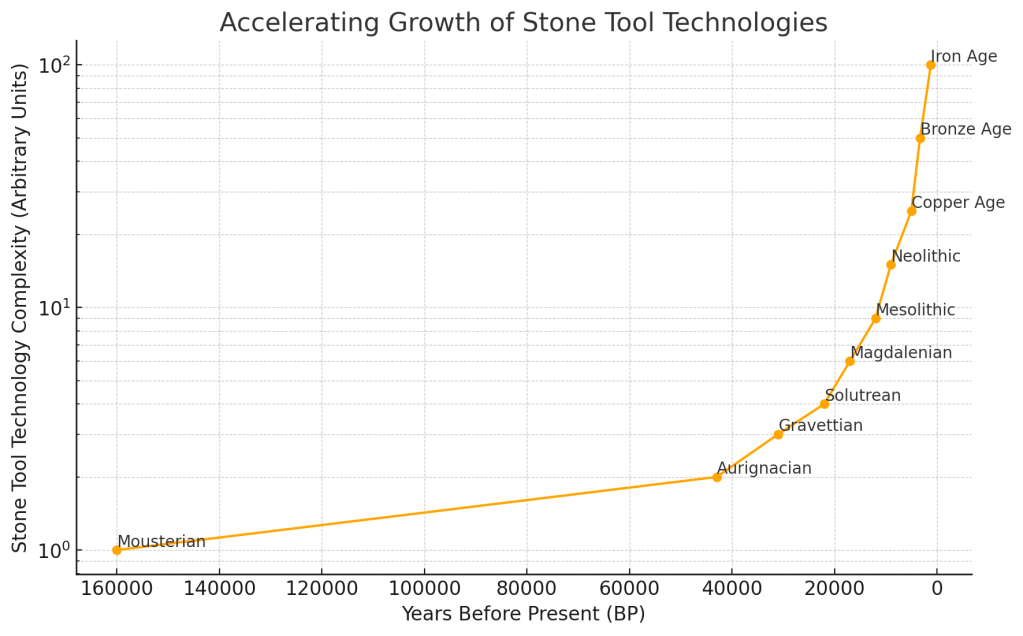
Figure 1: Showing the development of stone tool technologies by archaeological phase.
One critique of the above chart that could be made is that the phases of stone tool development are ones that archaeologists came up with and may not represent a quantifiable change in technology. So here is another chart looking at the development of cutting edge efficiency, which is a more quantifiable variable.

Figure 2: Showing development of cutting edge efficiency in stone tool technologies.
Inventiveness has always been a part of humanity, and this has been the driver of technological change. As humanity has developed technologies, our base of knowledge has increased and our skills have increased. Each of these factors and more are behind this exponential growth in technological change. Here is a chart showing the development of technology from stone tools until today.

Figure 3: Showing the exponential growth of all human technology over time.
When viewed over the long span, we have been on an upward exponential curve really since the Neolithic Era. The invention of Capitalism occurred along with the Industrial Revolution, already far along on the exponential curve. The acceleration was already happening.
We can see this same exponential growth if we divide technology into certain industries. Here are some charts below showing different technologies and their development.
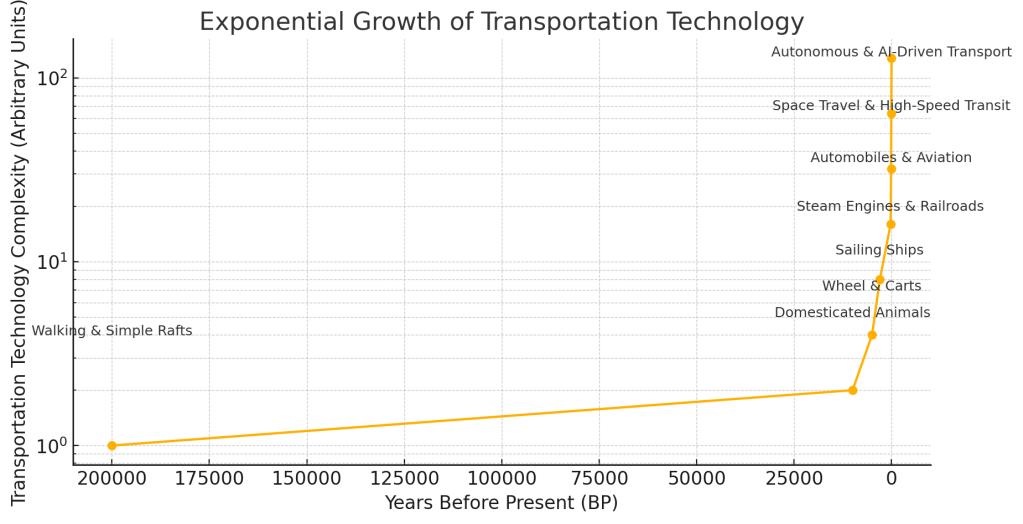
Figure 4: Showing the development of transportation technology.
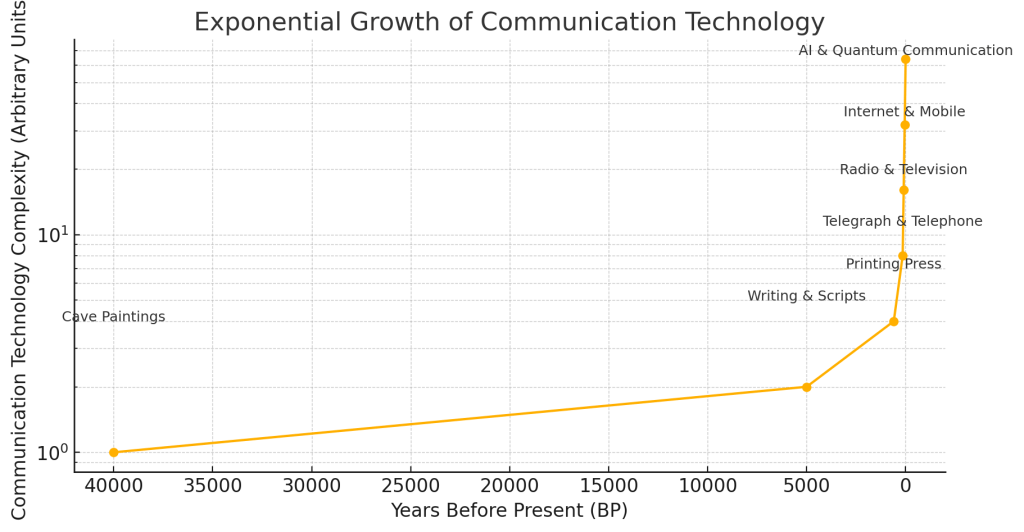
Figure 5: Showing the development of communication technology.
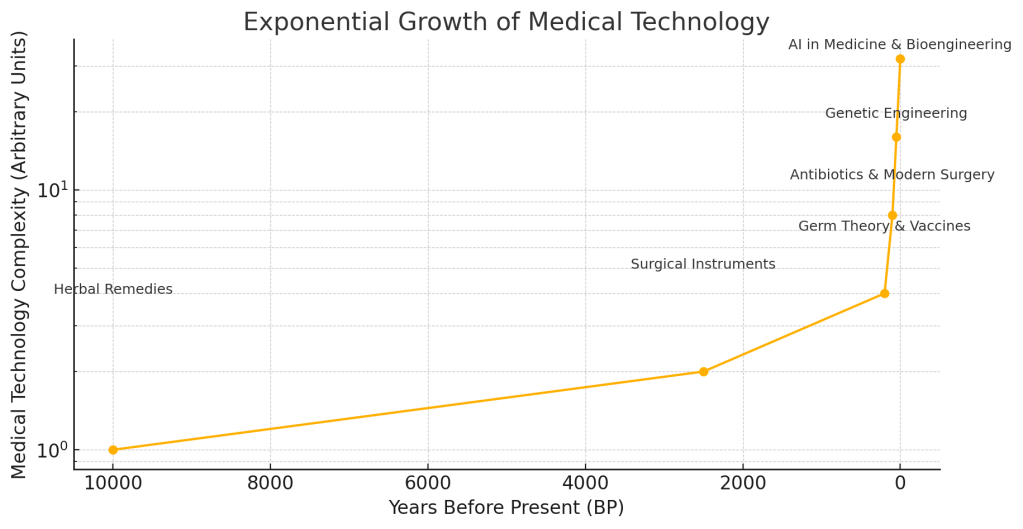
Figure 6: Showing growth of medical technology over time.
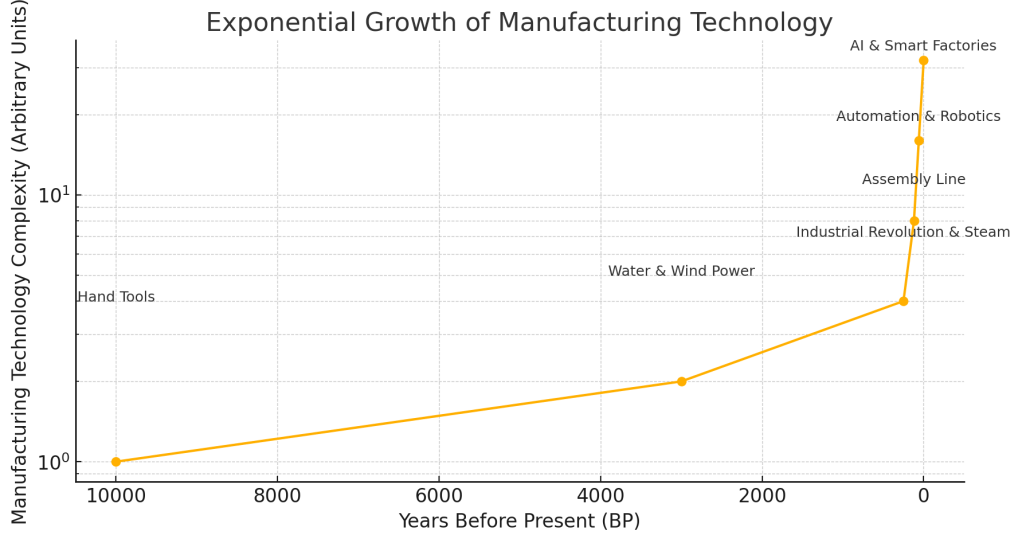
Figure 7: Showing development of manufacturing technology over time.

Figure 8: Showing the development of energy technology over time.
All these charts show the rough progression of technology over time. In the aim of transparency, all these charts were generated by ChatGPT. So they may not be perfect. But they do represent the general trend of technological acceleration.
I’m not deterministic, I do not think the acceleration of technology is an immutable law. There are no immutable laws when it comes to humans. But the drive for innovation has always been with us, long before Capitalism. And the acceleration of technological change was there long before Capitalism.
Those proponents of Capitalism who state that it is the cause for the acceleration of technology are making a basic mistake. They saw two corresponding trends occurring within a limited time frame, and – without any real evidence – they assumed one caused the other.
My argument is that this technological acceleration was already happening, and it was going to happen in some form or the other. What Capitalism did was to take control of this process, and ensure that the real benefits and wealth went to those at the top.
It is important to remember, you couldn’t make a Tesla unless some unknown and forgotten person (or maybe a group of people) invented the wheel about 6000 years ago. Or if a long line of people hadn’t figured out how to control fire and concentrate it in blast furnaces to work metal. All that occurred well before Capitalism.
The real driver behind this technological acceleration is humanity, with our inventiveness and our compulsion to make things better. We need to unshackle this drive from the control of Capitalists, and use it to build a better future for all.
In the second part of this essay, I’ll look at the role of the public sector in the development of modern technologies and innovation. Coming soon!
 Building the Future Now
Leave a comment