Tag: technology

  • Drones and the Future of Warfare

    Warfare has always been shaped by technological innovation. From metallurgy and explosives to aviation, computing, and satellite navigation, militaries have consistently sought new technologies that provide an advantage on the battlefield. Today, another transformation is underway. The rapid development of unmanned aerial vehicles (UAVs), ground and naval drones, and the emergence of artificial intelligence are changing not only how wars are fought, but also who fights them, where they are fought, and how decisions about life and death may ultimately be made.

    The war between Russia and Ukraine has become the world’s largest testing ground for many of these technologies, offering a glimpse into what future conflicts may look like. While drone warfare has the potential to reduce the exposure of soldiers to direct combat, it also expands the battlefield, lowers the cost of projecting military power, and raises difficult ethical questions about increasingly remote and autonomous warfare. These are developments that deserve careful attention, because their implications extend well beyond the current conflict.

    The Drone Revolution

    The development of military drones is not a recent phenomenon. During World War II, the United States experimented with radio-controlled aircraft, and in the early 1950s the U.S. Air Force introduced the Ryan Firebee, a jet-powered drone primarily used as an aerial target. As the Cold War intensified, surveillance became a major focus, leading to the development of unmanned aircraft capable of gathering intelligence while reducing the risks faced by pilots. During the Vietnam War, these systems expanded beyond reconnaissance to include electronic warfare, leaflet distribution, and decoy missions designed to expose enemy air defenses.

    The modern era of drone warfare began in the 1990s with the introduction of the General Atomics Predator. Unlike its predecessors, the Predator could not only observe the battlefield but also strike targets. During the Global War on Terror, drones became an increasingly important tool for surveillance and precision strikes against high-value targets, culminating in larger and more capable systems such as the MQ-9 Reaper.

    For much of this period, the United States emphasized highly sophisticated and extremely expensive drone platforms. More recently, however, another model has emerged. Rather than pursuing the most technologically advanced systems possible, countries such as Iran have focused on producing inexpensive drones that can be manufactured in large numbers. Even when individually limited in capability, these systems can force an adversary to expend air-defense missiles costing millions of dollars to destroy drones worth only tens of thousands. Ukraine has adopted a similar approach against Russia, and Taiwan is preparing for the possibility of doing the same in the event of a conflict with China. This shift is changing the economics of warfare by allowing relatively inexpensive systems to threaten far more costly military equipment.

    Nowhere is this transformation more evident than in the war between Russia and Ukraine. The conflict has become an enormous laboratory for drone warfare, where innovations are tested, countered, and refined at a pace rarely seen in modern military history. First-person-view (FPV) drones have become ubiquitous, allowing operators to guide drones directly onto their targets. Unmanned ground vehicles now transport supplies, lay and clear mines, evacuate wounded soldiers, and even serve as remotely operated weapons platforms. Naval drones have likewise emerged as an increasingly important component of the conflict.

    Perhaps most striking is the speed of innovation. Each side continually adapts to the other’s latest technology, driving new ideas from conception to the battlefield in a matter of months rather than years. This stands in sharp contrast to the traditional military procurement process, where developing, testing, and fielding new equipment often takes many years. The result is a battlefield where technological evolution occurs almost in real time.

    The Changing Role of the Soldier

    Perhaps the most profound consequence of drone warfare is that it is beginning to separate the soldier from the battlefield itself. Soldiers remain essential to modern warfare, and no current conflict has eliminated the need for infantry, armor, or artillery. Yet in Ukraine, drones are increasingly carrying out missions that would once have required soldiers to expose themselves directly to enemy fire.

    In some sectors of the front, the density of drone surveillance and attack has created broad areas where movement by foot or vehicle is exceptionally dangerous. Both sides rely heavily on unmanned systems to cross these zones, delivering supplies, evacuating wounded personnel, conducting reconnaissance, or striking enemy positions. In some ways, these areas resemble the “No Man’s Land” of the First World War, where advancing soldiers faced overwhelming danger. The difference today is that increasingly it is robot that cross these deadly spaces instead of humans.

    Some Ukrainian military leaders have even suggested that future frontlines may require dramatically fewer soldiers than they do today, with unmanned systems performing many of the most dangerous combat tasks. Occupying and securing territory will almost certainly continue to require soldiers on the ground, but the direct delivery of firepower may increasingly come from operators located miles from the battlefield.

    For thousands of years, the soldier has been the central figure of warfare, whether armed with a spear, sword, bow, rifle, or tank. Drone warfare represents one of the first genuine departures from that tradition. The person delivering lethal force is no longer necessarily standing on the battlefield. Instead, they may be sitting in a command post many miles away, viewing the conflict through a screen. What this shift will ultimately mean for military strategy, for the psychology of combat, and for society’s understanding of war remains an open question.

    The Expanding Battlefield

    If drone warfare has the potential to remove soldiers from parts of the battlefield, it also has the potential to expand the battlefield itself. One of the defining characteristics of the war in Ukraine has been the increasing importance of factories, power grids, transportation networks, communication systems, and other infrastructure that sustain military production. As both Russia and Ukraine have sought to degrade each other’s ability to produce drones, ammunition, and other military equipment, these systems have become increasingly important strategic targets.

    This reflects a broader shift in the nature of warfare. Success is no longer determined solely by which army can outmaneuver the other on the battlefield, but also by which nation can sustain industrial production, adapt its technology, and replace its losses more quickly. In many respects, war is becoming as much a contest of manufacturing capacity, engineering, logistics, and supply chains as it is of soldiers and weapons.

    The economics of drone warfare reinforce this trend. A drone costing only a few thousand dollars may require an interceptor missile costing hundreds of thousands or even millions of dollars to destroy. This imbalance creates enormous incentives to develop cheaper methods of defense while simultaneously increasing the importance of maintaining the factories, energy systems, and transportation networks that make large-scale drone production possible.

    The result is a troubling paradox. As technology removes more soldiers from direct combat, it also broadens the range of places that become strategically significant during war. The battlefield no longer ends at the front lines; it increasingly extends into the industrial and civilian systems that support the war effort.

    The Future of Warfare

    If the war in Ukraine demonstrates anything, it is that innovation in warfare is no longer measured in decades but in months. Each technological advance is quickly met with a countermeasure, which is then answered with another innovation. The result is a battlefield where adaptation has become as important as the technology itself.

    Many of these developments are already changing the balance of military power. Relatively inexpensive drones now allow smaller nations and even non-state actors such as terrorist organizations and criminal cartels to field capabilities that were once reserved for the world’s largest militaries. Precision strike capability is becoming increasingly affordable, lowering the barriers to projecting military force.

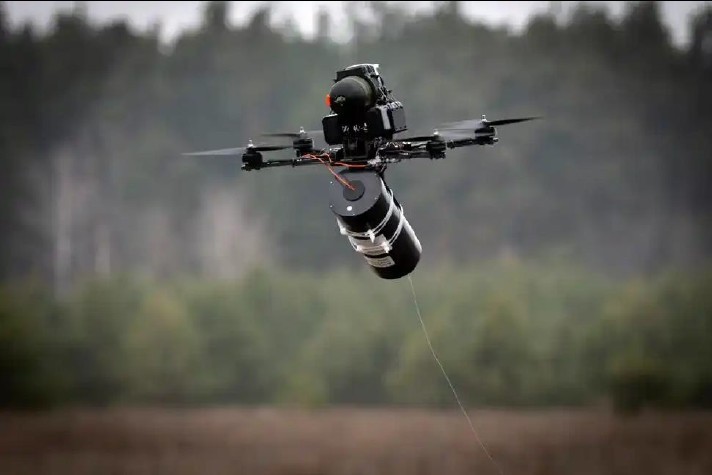
    The pace of innovation shows no sign of slowing. Naval drones are beginning to transform maritime warfare, while fiber-optic-guided drones have emerged as a response to electronic jamming, trailing cables across fields and villages as they remain physically connected to their operators. New tactics and technologies appear on the battlefield almost as quickly as they can be conceived.

    One reason for this rapid evolution is that militaries are increasingly encouraging innovation from the bottom up. Rather than waiting years for formal procurement programs to produce new equipment, the US military is starting to adapt commercially available drones to meet immediate battlefield needs. Throughout history, soldiers have demonstrated remarkable ingenuity in solving tactical problems, and inexpensive drone technology has dramatically expanded what small units can accomplish with limited resources.

    The next stage of this evolution may prove even more consequential. Artificial intelligence is already being incorporated into drone systems to assist with navigation, target recognition, and autonomous operation. Swarms of coordinated drones acting together could overwhelm traditional defenses, while increasingly autonomous systems may reduce the amount of direct human control required to carry out attacks.

    Conclusion

    While researching this essay, I watched a documentary about a Ukrainian drone unit responsible for striking Russian soldiers and military vehicles. The operators were young, many in their twenties, a generation that had grown up playing video games. Sitting behind computer screens, they guided drones toward targets miles away from their position. Their mission was understandable in that they were defending their homeland and fighting to reclaim occupied cities.

    Yet the technology itself raises unsettling questions. The physical distance created by drone warfare also creates psychological distance. Throughout history, soldiers have generally confronted the terrible reality of violence face to face. Drone operators experience war differently. Watching a battlefield through a screen inevitably changes the experience of combat, and it may also change our relationship to killing itself.

    This concern is reinforced by aspects of drone culture that have emerged during the war. First-person-view footage is regularly shared on social media, while some military units have experimented with reward systems resembling the “kill streaks” and point systems familiar to many video games. These developments do not erase the reality that war remains horrific, but they do illustrate how technology can blur the boundary between genuine combat and virtual experience.

    Drone warfare presents a striking paradox. It has the potential to make war safer for soldiers by removing them from some of the most dangerous parts of the battlefield. At the same time, it expands the battlefield into factories, power grids, transportation networks, and civilian infrastructure. It makes entire societies more directly involved in sustaining the war effort. War becomes increasingly remote for those fighting it, while becoming increasingly immediate for everyone else.

    Looking ahead, the questions become even more profound. As artificial intelligence becomes integrated into drone systems, humans may increasingly surrender not only the act of fighting but also parts of the decision-making process itself. At what point does assistance become autonomy? At what point do we become comfortable allowing machines to determine when and how deadly force should be used?

    Drone warfare is unlikely to disappear. If anything, it represents the beginning of a much broader transformation in the nature of war. More fundamentally, it illustrates a pattern that extends well beyond the battlefield: our technological capabilities are advancing more rapidly than our moral and ethical frameworks. We are developing increasingly sophisticated systems capable of finding, tracking, and killing human beings while only beginning to confront the ethical questions they raise. Whether humanity can develop the wisdom to govern these technologies may prove to be one of the defining challenges of the twenty-first century.


    Cover image is of a fiber optic spool-fed drone from the US Army. Source image found here.


    This is part 1 of a four-part series that deals with the rapid development in the technology of war and its implications for humanity. You can read the other essays from the links below:

    Part 2: The Weaponization of AI

    Part 3: What Does Autonomous Warfare Look Like?

    Part 4: The Last Arms Race: Teaching AI to Wage War


    This essay develops themes explored more fully in my recently published book, The Last Apocalypse: Consciousness, Revelation, and the Future of Humanity.

    Buy my book here

  • Building the Future Now: Confronting Our Greatest Challenges

    In the previous three essays, I have been laying out a path for addressing the major challenges of our time. That path begins at the individual level, with the work of developing ourselves spiritually, emotionally, and ethically. From there, it extends outward into our closest relationships, our communities, our workplaces, our institutions, and ultimately society as a whole.

    The emphasis on individual transformation was never meant to imply that our problems are merely personal. Rather, it reflects the belief that large-scale change begins with the people who participate in and shape the systems around them. If we hope to address the immense social, political, economic, and environmental challenges before us, we need individuals who are capable of acting with wisdom, maturity, compassion, and clarity. Because the reality is that we currently face a number of profound challenges, and how we respond to them over the coming decades will determine the course of human history.

    Thanks for reading A Path Through the Apocalypse! Subscribe for free to receive new posts and support my work.

    The Major Challenges of Our Time

    AI, Work, and Human Purpose

    One of the major challenges humanity may face in the coming decades is the potential for AI-driven unemployment. We are already beginning to see signs of job displacement, particularly in white-collar and entry-level positions. For instance, in the legal profession AI is increasingly performing routine research, document review, and form preparation. A similar pattern is emerging in software development, where AI tools are reducing demand for junior developers while making experienced programmers significantly more productive.

    Other fields are experiencing similar pressures. Translation work, copywriting, customer service, data entry, administrative support, and basic graphic design have all been affected by the growing ability of AI systems to perform tasks that once required human labor. In many cases, the jobs are not disappearing entirely, but fewer workers are needed to produce the same output. A marketing department that once required ten people may now require five. A customer service team of one hundred may be reduced to forty.

    AI may ultimately eliminate a large percentage of existing human jobs, potentially on a scale unprecedented in human history. The deeper issue is not whether AI will eliminate all jobs, but whether society can adapt to a future in which technological progress continuously reduces the amount of human labor required to create goods, services, and information. If productivity continues to rise while employment opportunities shrink, we may be forced to rethink how wealth, opportunity, and purpose are distributed within society.

    A background concern to all of this is wealth inequality. If AI dramatically increases productivity while reducing the need for human labor, who benefits? One possible future is one in which the owners of AI systems–the shareholders, founders, and executives of a relatively small number of companies–capture a disproportionate share of the wealth created. A second group might consist of highly skilled workers who use AI to enhance their productivity to levels we can scarcely imagine today. But where does that leave everyone else?

    This question is particularly important because we already live in a period of severe wealth inequality. Across much of the world, wealth and economic power have become increasingly concentrated in the hands of a small minority. This is already a destabilizing force. If large numbers of people were to find themselves without meaningful employment, reliable income, or a sense of purpose, the social consequences could be profound.

    One of the most commonly proposed solutions is a Universal Basic Income (UBI), in which every person receives a guaranteed income regardless of employment status. UBI may ultimately become necessary in some form, but it raises important questions of its own.

    Who controls the flow of resources? Who determines the amount people receive? Is it enough merely to survive, or enough to live a meaningful and fulfilling life? Does it allow people to travel, pursue education, spend time with family and friends, create art, volunteer in their communities, and explore new possibilities? Or does it simply provide a minimal subsistence while economic and political power become increasingly concentrated elsewhere?

    There is also a deeper question. A society in which most people depend upon a small group of institutions for their livelihood requires a tremendous degree of trust. What happens if political priorities change? What happens if economic crises occur? What happens if those who control the resources come to view the broader population not as fellow citizens, but as dependents, burdens, or obstacles? We already see this sort of ideology right now when it comes to poor and vulnerable communities in our current economy.

    These questions do not mean that UBI is a bad idea. They simply illustrate that income alone may not solve the deeper challenges posed by a future in which human labor is no longer central to economic production. The issue is not only how wealth is distributed, but how power, dignity, purpose, and democratic participation are preserved in an age of intelligent machines. These are profound questions, and I am not sure we are currently prepared to address them with the wisdom and maturity they require.

    AI, Energy, and Environmental Sustainability

    Another immediate concern surrounding AI is its growing demand for energy and water. The data centers that power modern AI systems require enormous amounts of electricity. Large AI data centers can consume as much power as a small city, placing increasing strain on electrical grids that are still largely powered by fossil fuels such as coal and natural gas. As AI development accelerates, so too will the demand for computing power, and with it the demand for energy.

    This raises obvious environmental concerns. If the electricity powering these facilities continues to come primarily from fossil fuels, increased AI adoption could contribute to higher greenhouse gas emissions at precisely the moment when many scientists argue emissions need to be rapidly reduced.

    Water consumption is another issue that receives far less public attention. Data centers generate tremendous amounts of heat and require extensive cooling systems. Many facilities use hundreds of thousands of gallons of water per day, while some of the largest consume millions. Much of this water is lost through evaporation during the cooling process, while the remainder often becomes wastewater that must be treated before being discharged back into the environment.

    These demands place additional pressure on local infrastructure. Supplying large volumes of water to data centers and managing the resulting wastewater can strain municipal systems, particularly in regions already facing water scarcity or aging infrastructure. As AI becomes more deeply integrated into society, questions surrounding energy use, water consumption, environmental sustainability, and environmental justice will become increasingly difficult to ignore.

    There is another aspect of this issue worth considering. Public conversations about climate change have often been shaped by powerful economic interests. Industries whose profits may be affected by environmental regulations have frequently sought to influence public opinion, political decision-making, and the flow of information. This does not mean that every argument made by these industries is wrong, but it does remind us that economic interests often play a significant role in shaping public debate.

    As AI becomes increasingly important to the global economy, the corporations that develop and control these technologies will likely acquire similar influence. They will have strong incentives to shape public policy, public perception, and regulatory frameworks in ways that benefit their interests. Whether the issue is energy consumption, data privacy, labor displacement, environmental impacts, or market competition, we should expect powerful actors to advocate for outcomes that align with their economic goals.

    For this reason, one of the most important skills citizens can develop is the ability to critically evaluate information. We need to become better at distinguishing evidence from propaganda, and at recognizing the interests and incentives that often lie behind public narratives. In an age of increasingly powerful technologies and increasingly sophisticated forms of persuasion, critical thinking is not merely an intellectual virtue, it is also a civic necessity.

    From Climate Change to Global Instability

    These environmental concerns feed directly into broader concerns about climate change. At this point, the central question is no longer whether climate change is occurring, but rather how severe its effects will become and how effectively humanity can adapt to or mitigate them.

    Scientists project a wide range of impacts, including rising temperatures, more frequent and intense heat waves, changing precipitation patterns, increased drought in some regions, heavier flooding in others, sea-level rise, and growing pressure on ecosystems. These changes may place increasing stress on agriculture, water supplies, infrastructure, and public health.

    Climate change may also increase the spread of certain diseases by expanding the range of disease-carrying insects and placing additional strain on health systems. As some regions become more difficult to inhabit due to extreme heat, drought, crop failures, or rising seas, large-scale migration may occur, particularly from equatorial regions and parts of the Global South. Such movements could place additional pressures on receiving countries and contribute to political and social tensions.

    Food security is another concern. Modern civilization depends upon complex and highly interconnected global supply chains. Climate-related disruptions to agriculture, transportation networks, energy systems, or critical infrastructure can create cascading effects that extend far beyond the regions directly affected. Shortages in one area may ripple across continents through trade, markets, and supply networks.

    The result may be increasing societal instability and growing challenges to the resilience of the global system itself. Climate change is therefore not simply an environmental issue. It is also an economic issue, a public health issue, a migration issue, and ultimately a question of political and social stability.

    Political Polarization and Social Fragmentation

    Large-scale migration, economic disruption, rising living costs, resource scarcity, and declining trust in institutions can all place stress on political systems. We are already seeing some of these dynamics emerge in various parts of the world. For example, migration into Europe from Africa and the Middle East has become a major political issue and has contributed to the growth of nationalist and far-right movements in some countries.

    Economic insecurity can produce different political responses. Some people may be drawn toward more collectivist or redistributive economic models, while others may support nationalist, populist, or authoritarian movements that promise stability and order. The specific ideological response often varies from one society to another, but the underlying pattern is similar: periods of uncertainty tend to create fertile ground for political polarization.

    This process can lead to increased conflict and fragmentation within nation-states. Political opponents increasingly come to view one another not simply as people with different opinions, but as existential threats. Compromise becomes more difficult, trust erodes, and institutions come under increasing strain.

    Tribalism plays an important role in this process. As we have discussed elsewhere in this series, human beings have a strong tendency to divide themselves into competing groups. During periods of relative stability, these divisions can often be managed. During periods of crisis, however, tribal identities frequently become stronger and more antagonistic. In such environments, fear and uncertainty can accelerate social fragmentation, making collective action on shared problems increasingly difficult.

    This dynamic also helps explain the rise of apocalyptic thinking. When people perceive that the institutions around them are failing, that their way of life is under threat, or that society itself is becoming unstable, they often begin to imagine the future in catastrophic terms.

    Global Instability, Arms Races, and the Future of War

    Taken together, these trends suggest that we may be moving away from the post-Cold War vision of a rules-based international order and toward a more fragmented world characterized by great-power competition, nationalism, oligarchic concentrations of wealth, and the growing appeal of authoritarian political models. Whether this transition is temporary or long-lasting remains to be seen, but it has become a source of increasing concern for many observers.

    The same insecurities that can drive conflict between individuals can also emerge at the level of nations. Fear, status anxiety, competition for resources, historical grievances, and the desire for recognition do not disappear when human beings act collectively. Instead, they can become embedded within national identities and expressed through diplomacy, economic competition, and, in some cases, military conflict.

    Recent wars have also demonstrated that the nature of warfare is changing. The conflict in Ukraine has revealed the growing importance of drones, autonomous systems, cyber operations, and AI-assisted decision-making. Technologies that were once available only to major powers are becoming increasingly accessible, allowing smaller actors to challenge larger and more technologically advanced opponents through multiple forms of asymmetric warfare.

    At the same time, geopolitical tensions remain high in several regions of the world. Rivalries among major powers, conflicts in the Middle East, disputes over territory and resources, and the continued existence of nuclear arsenals all contribute to an environment of uncertainty. While no one can predict the future, the possibility of escalation remains a persistent concern.

    Most public attention tends to focus on the threat of nuclear war, and for good reason. Yet another emerging concern is the weaponization of artificial intelligence. As AI becomes increasingly integrated into military systems, difficult ethical and strategic questions arise. How much decision-making should be delegated to machines? What happens when autonomous systems make mistakes? And how do nations prevent an arms race in increasingly intelligent and autonomous weapons?

    These questions point to a broader challenge. Humanity’s technological capabilities are advancing rapidly, but it is far less clear that our political institutions, ethical frameworks, and systems of international cooperation are keeping pace.

    From Anxiety to Action

    If the challenges outlined above are real, then addressing them will require changes that go far beyond any single policy proposal. The problems themselves are interconnected, and so must be the solutions.

    A starting point is the growing polarization that characterizes much of public life. We need to become better at evaluating information, distinguishing fact from manipulation, and engaging with people who hold different views. Yet even this is not enough. Throughout this series of essays, I have emphasized the importance of personal growth and what I call critical spirituality. If we are not acting from a place of stability, maturity, self-awareness, and wisdom, then we have little hope of addressing the immense challenges before us.

    There are powerful forces driving many of the trends discussed in this essay. Economic interests, political incentives, media systems, and technological momentum all shape the world around us. It is unlikely that these forces can simply be argued away. In my experience, argument alone rarely changes people. The more effective path is to build something betters that people can see, experience, and participate in for themselves.

    Yet before we can build healthier institutions, we must cultivate the qualities that make them possible. No political system, economic model, or technological solution can substitute for wisdom, compassion, self-awareness, and a genuine concern for the well-being of others. The crises we face are not merely technical problems requiring technical solutions. They are also human problems, rooted in fear, greed, tribalism, and our tendency to prioritize short-term interests over long-term flourishing. If we fail to address these deeper dimensions of human life, we may find ourselves recreating the same problems under new names and within new systems.

    For this reason, I believe that strong communities will be essential in the decades ahead. We need institutions that foster cooperation rather than isolation, mutual aid rather than indifference, and shared purpose rather than endless competition. We need ways of connecting people that are deeper and more meaningful than the forces pulling them apart.

    The challenge posed by AI illustrates this clearly. If automation reduces the need for human labor, then we will need new ways of distributing the wealth generated by increasingly productive technologies. Proposals such as Universal Basic Income, taxes on AI-generated productivity, public ownership stakes in AI companies, or other forms of social wealth-sharing deserve serious consideration. At the same time, we should not lose sight of the value of human craftsmanship, creativity, care, and community. Not everything of value can or should be automated.

    I am also drawn to more localized and cooperative economic models. Worker cooperatives, community-owned enterprises, mutual aid networks, and other democratic forms of economic organization may provide ways of distributing both power and opportunity more broadly. Such approaches will not solve every problem, but they may help create a society in which technological progress benefits everyone rather than a small number of owners.

    These same principles may also help address some of the broader challenges discussed throughout this essay. Strong local communities are often more resilient during periods of disruption. Whether the challenge comes in the form of climate-related disasters, economic shocks, supply-chain disruptions, pandemics, or large-scale migration, communities with strong social ties and local institutions are generally better equipped to adapt. Cooperative enterprises and mutual aid networks can provide support when larger systems become strained, while localized economies may be less vulnerable to disruptions occurring thousands of miles away.

    This does not mean abandoning global cooperation or retreating into isolated localism. Many of the challenges we face, particularly climate change, require coordinated action at national and international levels. Yet resilient local communities can serve as an important foundation upon which broader solutions are built. In an increasingly uncertain world, social cohesion may prove just as important as technological innovation.

    None of this will be easy. Many of these ideas challenge deeply entrenched interests and assumptions. Entire industries are devoted to promoting particular economic and political worldviews. Significant change will require not only new policies, but also a shift in how we think about wealth, work, success, and our obligations to one another.

    Ultimately, the solution to apocalyptic anxiety is not withdrawal, despair, or waiting for someone else to save us. It is the difficult but necessary work of building healthier people, stronger communities, and more humane institutions. If we are entering a period of profound transformation, then the task before us is not merely to survive it, but to help shape what comes next. The future is not something that simply happens to us. It is something we create together, one decision, one relationship, and one community at a time.


    This is part 4 of a four part series on dealing with apocalyptic anxiety. You can find the other parts below:

    Part 1 – Our Fear of AI is Really Fear of Ourselves

    Part 2 – Developing Our Inner Selves: The First Bulwark Against AI Catastrophe

    Part 3 – Putting Critical Spirituality to Work in the World


    This essay develops themes explored more fully in my recently published book, The Last Apocalypse: Consciousness, Revelation, and the Future of Humanity.

    Buy my book here

  • Putting Critical Spirituality to Work in the World

    Introduction

    In the last essay, we explored developing our inner selves as the first bulwark against AI disruption. But inner work alone is not enough. We must put that into action in the world around us–in our relationships, our communities, our institutions, and society as a whole. Our everyday actions and behaviors do not remain isolated. Instead, they accumulate socially and help shape the larger systems of which we are part.

    By rebuilding our communities and strengthening our social fabric, by being involved in the lives of the less fortunate, and by working to address the issues that concern us most, we begin laying the foundation to confront the larger challenges ahead.

    Right now, society is too fractured, divided, distracted, and saturated with misinformation to effectively respond to issues such as environmental degradation, the enormous energy and water demands of AI infrastructure, the threat of mass unemployment, climate change, nuclear escalation, or future pandemics. We cannot meaningfully address these problems without stronger human relationships and healthier communities.

    And if we truly believe that some combination of these threats could place humanity itself at risk, then we should act accordingly.  It is not a question of who is going to go first. If you were in a house that was on fire, you would not stand still waiting to see whether others noticed the flames before deciding to move. You would sound the alarm and begin helping people toward safety. In much the same way, if we genuinely believe our civilization faces profound dangers, then our responsibility is to begin acting now regardless of what others are doing. And perhaps, by acting, speaking, organizing, and building differently, we may encourage others to do the same.

    (Re)Building Community

    In modern society, many of the social bonds that once held communities together have steadily eroded, especially over the last half century. As we work to build healthier communities, we are also rebuilding many of the things people increasingly feel are missing from modern life: trust, belonging, mutual support, resilience, shared meaning, and a greater sense of security and connection.

    One of the most important actions we can take is putting time and effort into our relationships with family and friends. This means being an active listener, showing up for important moments, being present for the good times and the bad. These actions may seem basic, but they form the foundation of strong social ties and deeply influence the people around us.

    Beyond our immediate relationships, there are many ways we can help rebuild the social fabric of our communities. This can include hosting dinners, organizing discussion groups or book clubs, sponsoring neighborhood events, mentoring young people, helping create cooperative enterprises, supporting local art and music scenes, or simply creating spaces where people can gather and genuinely connect with one another.

    Strong communities help reduce loneliness and alienation, foster accountability and mutual care, and weaken the insecurity and tribalism that increasingly dominate modern society. They create support networks that make people and communities more resilient during periods of disruption and instability. Ultimately, healthy communities form the foundation upon which stable and humane societies are built. It is worth the time and effort to get this part right.

    Caring for the Vulnerable

    Another way we can participate in building a better future is by helping lift up vulnerable people within our communities. This not only reconnects us with others–both the people being helped and those doing the helping–but also becomes a way of repairing some of the damage caused by an increasingly fragmented and unequal society. Many of the struggles people face today are deeply interconnected. Addiction, trauma, loneliness, family dysfunction, poverty, and mental illness often reinforce one another rather than existing in isolation.

    There are many different people who need care, support, and human connection: the elderly, the poor, the lonely, the imprisoned, the homeless, the addicted, the mentally ill, people with estranged families, struggling single parents, and many others.  These are people, often with difficult history and circumstances. Understanding and connecting with vulnerable people is important not only because it helps them, but because it helps restore the sense of shared humanity that our increasingly fragmented societies seems to have lost at times.

    This kind of work can take many forms: spending time with isolated elderly people, mentoring young people, supporting addiction recovery, helping struggling families, volunteering in prisons or shelters, or simply being present for people who feel abandoned and unseen. Importantly, this work does not only change the people being helped. It changes us as well. It deepens empathy, emotional awareness, humility, and our understanding of the interconnectedness of human suffering.

    If the future is increasingly shaped by technological systems, then the moral condition of the civilization building those systems matters enormously. A society that abandons vulnerable people, normalizes isolation, and treats human beings as disposable when they no longer fit neatly within the economic system may ultimately reproduce those same values within its institutions and technologies. But a society grounded in compassion, dignity, and mutual care may create something very different.

    Taking Meaningful Action

    One of the most important ways we can push back against helplessness and fragmentation is by directly involving ourselves in meaningful forms of social action. A positive aspect of getting involved is that it helps break us out of the disconnectedness of modern life. It pulls us away, at least in part, from the endless cycle of screens, algorithms, outrage, and passive consumption, and reconnects us with other people and the world around us. Instead of simply drifting anxiously into the future, we begin actively participating in shaping the kind of future we hope to see.

    There are many issues that need people willing to lend a hand: climate work, prison reform and prisoner outreach, food programs, addiction recovery, local organizing, youth mentoring, ecological restoration, elderly care, and the building of mutual aid networks, among many others. The important thing is not that everyone works on the same issue, but that people become engaged somewhere in meaningful ways.

    Many of us may not find deep purpose or fulfillment within our jobs alone, especially within an economic system that often leaves people feeling disconnected from meaningful forms of contribution. But outside of work, we still have the ability to direct our energy toward causes and communities that matter to us. In doing so, we not only help improve the world around us, but also begin reclaiming a sense of agency, connection, and shared responsibility that modern life increasingly erodes.

    Conclusion

    In this essay, I have focused on what we can do as individuals. This is not because I believe the full responsibility rests on ordinary people, but because this is how I have personally learned to deal with my own apocalyptic anxiety.  There needs to be larger systemic change, and ultimately the owners of AI need to be humanity as a whole instead of a few wealthy elites, corporations, and national governments. There ultimately needs to be larger systemic change, and I believe that increasingly powerful technologies like AI should ultimately be governed for the benefit of humanity as a whole rather than controlled by a small number of wealthy elites, corporations, or national governments. But meaningful systemic change rarely emerges out of nowhere. It requires groundwork. It requires relationships, trust, shared understanding, and communities capable of acting together.

    By rebuilding relationships and communities, we begin breaking through the individualistic shell that the digital age has increasingly placed around us. We create spaces where people can talk openly, think together, and resist the distorted and emotionally manipulative information environments created by modern media and social media algorithms. Strong communities make it easier to overcome misinformation, fear, tribalism, and isolation because they reconnect people through direct human relationships rather than purely digital ones.

    Rebuilding community also helps prepare us for some of the immediate disruptions that AI and other technological transformations may bring. Mass unemployment, for example, may eventually require large-scale wealth redistribution, forms of Universal Basic Income, stronger mutual aid systems, and more localized economies capable of supporting people outside mainstream economic structures. There are also major environmental concerns surrounding AI infrastructure itself, including enormous energy demands and water usage that are often pushed onto communities that are poorly equipped to resist exploitation or advocate for their own well-being.

    If we remain fractured, isolated, distracted, and emotionally disconnected from one another, addressing these challenges will become extraordinarily difficult. But if we can rebuild stronger communities grounded in trust, compassion, and shared responsibility, then we may still be capable of shaping a more humane future together.

    ____________________________________________

    This essay develops themes explored more fully in my recently published book, The Last Apocalypse: Consciousness, Revelation, and the Future of Humanity.

    Buy my book here